

Pacific
Asia
Mexico & Baja
USA
Europe
Carribean
Hawaii
Space-A & Military Travel
Family & Worldschooling
Disney & Theme Parks
Resort Reviews
Content Creator
Outfits
Resort Wear
Kids
Packing
Skincare
Makeup
Hair
Exclusive Codes
Finishing Touches
Dress Code
Latest Finds
About
Contact
Military Discount Codes
Shop the Holiday Edit
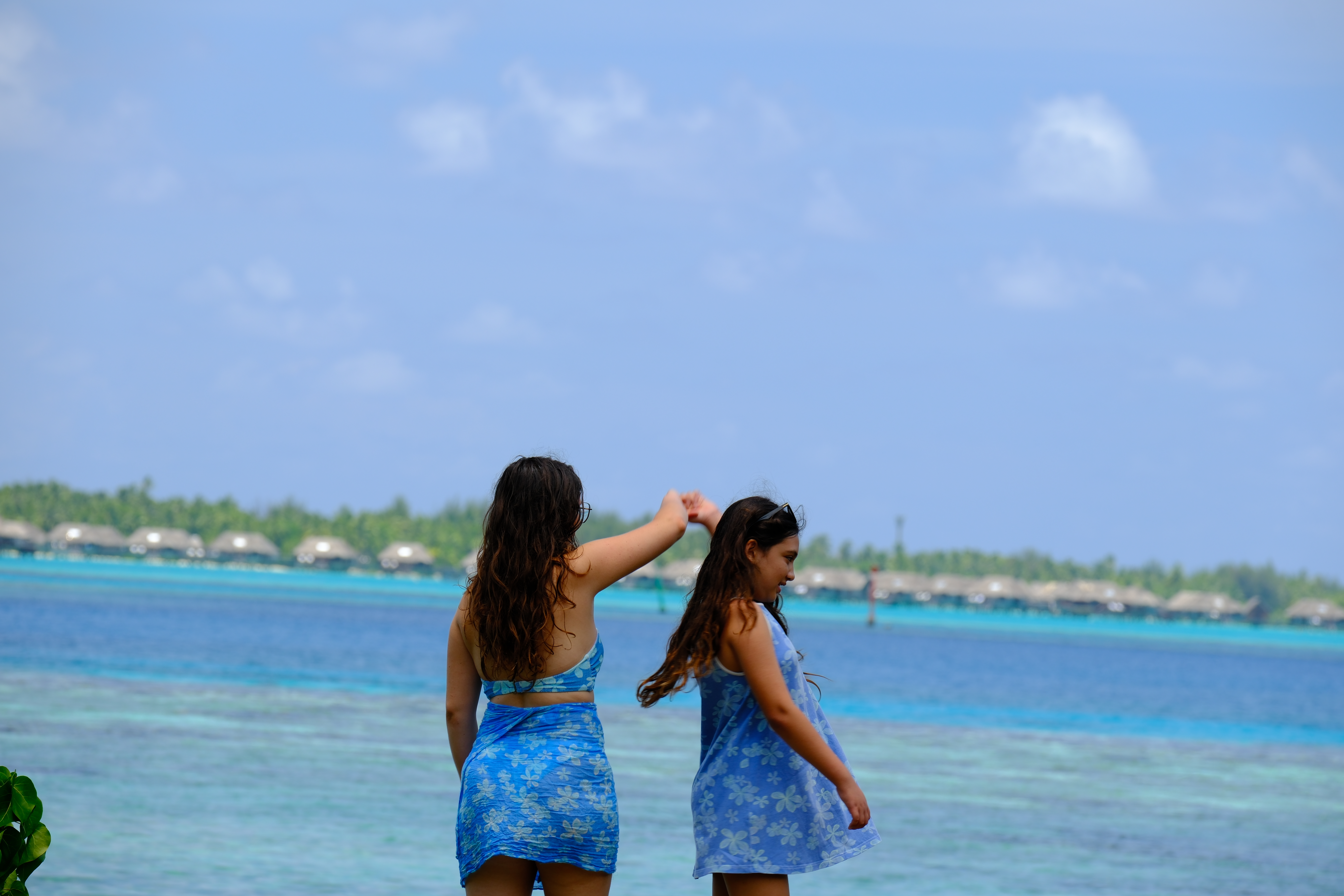
Things to Do in Bora Bora: 2 Months Living Like a Local


The Edit: This guide covers the best things to do in Bora Bora after 60 days living on the main island, including lagoon snorkeling, shark and stingray encounters, five self-guided hikes, resort day passes, and where to eat beyond your resort. It breaks down what each activity costs, what’s free, and what we skipped on purpose. Use it to plan a trip that goes further than the overwater bungalow.
Quick Facts
| Detail | Information |
|---|---|
| Location | Bora Bora, French Polynesia |
| Our experience | 60 days living on the main island |
| Free activities | 5 self-guided hikes, Matira Beach, shore snorkeling |
| Budget range | Free to $800+ per activity |
| Best free activity | The WWII cannon hike & manta ray snorkel |
| Best splurge | A private lagoon tour |
| Getting around | Rental car or taxi on the main island |
| Best for | Honeymooners, families, and budget travelers |

Most things to do in Bora Bora lists are written by people who spent four nights at a resort and took one lagoon tour. We spent 60 days living on the main island, buying groceries in Vaitape, driving the perimeter road almost daily, and testing everything from free ridge hikes to resort day passes.
When we mentioned to staff at the St. Regis that we were on the island for two months, the reaction was always the same: a gasp, then a hundred questions. This list is what actually made the cut.
Some of these things we did over and over. A few we skipped on purpose, and we’ll tell you exactly why, because knowing what to skip in Bora Bora saves you as much money as knowing what to book. Everything here links to a full firsthand review if you want the deep dive on any single activity.
Take a Bora Bora Lagoon Tour (But Read This Before Booking)
If you only do one paid activity in Bora Bora, this is it. The lagoon is the whole show, and a boat tour is the only way to see most of it. Here’s what 60 days of watching every boat on that water taught us: every tour hits the same three stops. The shark and stingray sandbank, a coral garden near the southern motus, and a motu picnic with your feet in the sand. The snorkeling is incredible at all of them because the lagoon is incredible.
What you’re actually choosing is the boat. The traditional outrigger with the tattooed hull, the sleek catamaran, the open deck with a hammock strung over turquoise water. That boat is the backdrop for the most iconic photos of your entire trip, and it changes everything about the day. We break down every operator on the island, from cultural outrigger tours to the big Viator names, in our full guide to snorkeling in Bora Bora.
We booked a private tour ourselves and it was worth every franc. You control the schedule, the stops, and nobody swims into your camera frame. You can read our full Bora Bora private snorkeling experience review from our Keishi Lagoon Tour, including the exact snorkel stops and the motu picnic with Mount Otemanu views.
Not ready to spend tour money? You can snorkel straight from shore on the main island for free. Our guide to the best snorkeling in Bora Bora covers the seven shore spots we found by getting in the water almost every day.


Swim With Sharks and Stingrays
Yes, there are sharks in Bora Bora, and swimming with them is the single most memorable thing most visitors do here. Every lagoon tour stops at the shark and stingray sandbank in the shallow center of the lagoon, where blacktip reef sharks cruise the sandy bottom and stingrays glide right past your legs.
It sounds more dramatic than it is. The sharks are small, calm, and completely unbothered by people. The stingrays are the bold ones, and they’ll come straight up to you. If you’re bringing kids, expect some nerves at first.
Ours went through the same thing, and after months in these waters they aren’t fazed by sharks or stingrays at all. Both encounters are extraordinary, and both are safe as long as you don’t stand on the reef or grab at the marine life.
We wrote a full breakdown of what swimming with sharks and stingrays in Bora Bora is really like, including which species you’ll actually see, how the encounters work, and what to know before you get in the water with a wild animal for the first time.


Swim With Moana, Bora Bora’s Most Famous Fish
Inside the St. Regis lagoonarium lives a Napoleon humphead wrasse named Moana, and meeting her might be the most surreal wildlife encounter on the island. She’s enormous, completely calm, and swims right up to snorkelers like she’s greeting guests.
The protected lagoon around her is packed with fish that have zero fear of people, so even beginner snorkelers get the kind of close encounters that usually take a dive certification. There’s also a resident eel in there, which startled our daughter more than any shark ever did.
You don’t have to be an overnight guest to do this. The lagoonarium is included with the St. Regis Bora Bora day pass, which also covers the boat transfer, a two-course lunch, the main pool, and the beach. Our full guide to swimming with Moana at the St. Regis covers what kind of fish she is, where to find her in the lagoon, and what the experience is like.


Swim with Manta Rays in Bora Bora (For Free)
Most visitors pay for a lagoon tour and hope the mantas show up. Here’s what 60 days on the island taught us: there’s one specific roadside pull-off on the north end where you can swim out to a manta ray cleaning station for free.
No tour, no boat, no signage. Cars pass it all day without knowing manta rays are getting their parasites cleaned 50 feet below the surface just off that quiet stretch of road.
We had two manta encounters there in a single morning, plus a spotted eagle ray while we waited between passes. Prime time is roughly 10am to noon.
One honest caveat: the rays hold at 25 to 50 feet deep along the reef wall, so the cinematic swim-right-beside-it experience takes real freedive ability. From the surface with a snorkel, it’s still one of the best free things you can do in French Polynesia.
The exact location, where to park, how the reef is laid out, and what gear to bring are all in our full guide to the Bora Bora manta ray spot.


Do a Resort Day Pass
Here’s the open secret of Bora Bora: you don’t need a $1,500-a-night booking to spend a day at a luxury motu resort. Most of the big properties sell day passes that include the boat transfer, lunch, and access to the beach and main pool, typically running from under $100 to over $200 per person depending on the resort and tier.
We’ve done them firsthand. Our daughter spent a full day at the St. Regis on a day pass, swimming the lagoonarium and catching the champagne saber show, and we broke down exactly what the St. Regis Bora Bora day pass includes and how to book it, since the resort only confirms about two weeks out.
The Westin runs three different tiers at three different prices, and one of them isn’t worth your money. Our Westin Bora Bora day pass guide explains which. If you’re staying on the main island, a day pass is the single best way to get the overwater-resort experience without the overwater-resort bill.


Best Hikes in Bora Bora: Views the Resorts Can’t Sell You
Most visitors spend their whole trip looking up at Bora Bora’s mountains. Almost nobody climbs them, which is a shame, because the island has free self-guided hikes most tourists never find, and one of them ends at a full 360-degree view of the entire lagoon.
Alex completed all five trails firsthand. The WWII cannon hike is the easy one, a roughly one-mile walk to two American naval guns still sitting in the jungle where the Navy put them 80 years ago.
Mount Mata Pupu is a short, sharp ridge climb above Pofai Bay. Arete de Matira is the family-friendly ridge near Bloody Mary’s with sweeping views over Matira Point.
Mount Mataihua is the big one, a rope-assisted climb to a 360-degree summit that took him four hours round trip. And the Valley of the Kings leads to a sacred banyan tree said to have inspired Avatar.
Every one of them is free. What they’re not is signed, maintained, or patrolled. There’s no search and rescue infrastructure on this island, so the harder routes demand offline maps, a charged phone, and honest self-assessment. Some upper routes toward Mount Pahia and Otemanu should only be done with a local guide, and we name the three guides worth booking.
Trailhead directions, difficulty ratings, firsthand trail stats, and when you need a guide are all in our complete guide to hiking in Bora Bora.

Best Things to Do in Bora Bora for Cruise Passengers
If you’re coming off a ship with one day on the island, a day pass might be the best way to spend it. The InterContinental Thalasso runs the most cruise-friendly program, with a half-day tier around $95 that includes the boat transfer and lunch.
Book before you sail, because day passes are capacity-limited and confirmed close to the date. If you’d rather stay flexible, a morning lagoon tour plus an afternoon wandering Vaitape covers the two best sides of the island in one shore day.
Every resort’s pricing, inclusions, and booking process, compared side by side, is in our full Bora Bora day pass guide.
Eat Off the Resort (Your Wallet Will Thank You)
Resort food in Bora Bora is beautiful and brutally expensive. During our St. Regis stay we tracked real prices, and eating every meal on property can run $400 to $700 a day. The main island is where you fix that, and after 60 days of eating our way around it, we can tell you the local food scene is one of the best things to do here, not just a budget move.
The night that surprised us most was the Bora Bora Yacht Club, a waterfront spot near Vaitape where the floor clears twice a week for a Polynesian dinner show that ends with fire dancers on the sand next to your table. Two courses run 7,900 XPF, and it beats watching a resort luau from a stage seat.
On the opposite end, La Villa Mahana is the island’s fine dining crown, seven candlelit tables inside a villa run by a chef who trained under Paul Bocuse. It’s the one expensive meal on the island that left us full and convinced it was worth every franc.
Between those two extremes you’ll find the beach snacks, roulottes, and local spots where Bora Bora actually eats. Our full guide to Bora Bora restaurants ranks everywhere we ate, and food places in Bora Bora covers the cheap, local end of the spectrum for when you land and just need a good plate.


Spend a Day at Matira Beach
Matira is the beach in Bora Bora, the big public stretch of sand on the island’s southern tip, and it’s free. The water is that unreal turquoise you only see in a handful of places on earth, and it stays shallow forever. Alex walked nearly a thousand feet out and it was still only chest-deep on him. A local friend told us that at low tide you can walk almost the whole way to the barrier reef in five or six feet of water.
It’s also a working beach in the best way. Stingrays and eagle rays cruise through the shallows, locals paddle outriggers in the evening, and the people-watching alone is worth an afternoon. Bring your snorkel mask, because you’ll see plenty right from shore.
When you get hungry, you have two very different moves within walking distance. Snack Matira is the feet-in-the-sand local lunch spot where you park and you’re already on the beach, and it’s the one families shouldn’t skip. The Bora Bora Beach Club down the road brings real cocktails, a killer sunset, and one catch we explain in the full review.
If your whole trip allows for only one free afternoon off the resort, spend it here.


Getting Here and Getting Around
Quick logistics, because they shape everything else on this list. Most visitors fly into Bora Bora’s motu airport via Tahiti, but there’s a cheaper way most tourists never consider: the ferry. The Apetahi Express crosses from Papeete in about seven hours and docks right in Vaitape.
The Vaeara’i ferry is the overnight cargo ferry locals take, twelve-plus hours through Huahine, Raiatea, and Taha’a, and it turned into one of our favorite travel days of the whole trip. We compared both in Apetahi Express vs Vaeara’i, and our complete guide to how to get to Bora Bora covers flights, ferries, and transfers in one place.
Once you’re here, the whole island runs on a single perimeter road you can drive in under an hour. We rented a car from Avis for our entire 60-day stay, and it’s the reason half the free things on this list were possible: the hikes, the manta spot, the shore snorkeling, the off-resort restaurants.
Our full Avis Bora Bora rental review covers pricing, long-stay rates, and everything we learned from two months with the same car. Taxis exist but are limited, so arrange pickups in advance rather than counting on hailing one. If you’re staying at a motu resort, you’ll move by boat shuttle, and every resort runs its own schedule and pricing.


Seeing Bora Bora From the Air (And Why We Skipped It)
Full disclosure: we didn’t do either of these, and here’s exactly why, because knowing what to skip matters.
Tandem parasailing runs constantly on the eastern side of the lagoon, and it looks incredible. It’s also around $800 a trip. Alex is a pilot and would have loved it, just not at that price.
Helicopter tours through Tahiti Nui Helicopters are the other aerial option, with scenic flights running 20 to 30 minutes and pricing in the same painful neighborhood, roughly $800 per couple for the shared 30-minute flight.
We passed for three reasons: the cost, the short window, and the pilot in the family knows exactly how helicopters operate and politely wants nothing to do with them.
Here’s the thing, and reviews from other hikers back us up on this: you can get nearly the same view for free and keep it for hours. Alex summited Mount Mataihua solo, sat up there for an hour flying the drone, and in four hours on the mountain saw zero other hikers. The summit gives you a full 360 of the lagoon, the reef, the motus, and the resorts. If you’ve got the legs for it, our hiking in Bora Bora guide is the budget answer to the helicopter ticket.
If money’s no object and hiking isn’t your thing, the aerial views really are spectacular. For everyone else, the mountains are free.
Shop Where the Locals Send You
Bora Bora is not a shopping destination, and anyone who tells you otherwise is selling something. But there are a few genuine finds, and one of them became the most asked-about detail in every photo we took on the island: a custom flower crown.
Bora Hei in Vaitape makes them to order for around 3,000 XPF, and resort staff and guests stopped us constantly to ask where we got ours. The full story, plus how to keep a crown fresh for days instead of hours, is in our guide to where to get a flower crown in Bora Bora.
Beyond that, look for hand-dyed pareos, shell jewelry, woven pandanus hats, and Tahitian black pearls, the one souvenir actually grown here. Our guide to shopping in Bora Bora covers the few shops actually worth your time.


Explore Vaitape, the Island’s Only Real Town
Vaitape is Bora Bora’s main town, its ferry dock, and the closest thing the island has to a downtown, and it deserves an hour or two of wandering. This is where we did our grocery runs for two months and where the island actually functions: the artisan market where we picked up our flower crowns, black pearl shops, small boutiques, banks, pharmacies, and the local lunch spots where the line tells you what’s good.
If you’re arriving by ferry or cruise tender, you’ll land here anyway, so build in time to walk it before racing off to the lagoon. It’s also home base for the practical stops, from the Avis counter to the taxi stand.

What to Do in Bora Bora When It Rains
Rain here usually arrives fast and leaves faster. We watched plenty of squalls cross the lagoon in 60 days, and most were gone within the hour, so don’t let a gray radar screen ruin your morning. If one settles in, you still have moves:
- Browse the black pearl shops in Vaitape
- Order a custom flower crown so it’s ready when the sun returns
- Book a spa day pass, the InterContinental’s Thalasso spa is the island’s most famous
- Settle into a long lunch, rainy season is when we found our favorite restaurants

Things to Do in Bora Bora FAQ
Snorkeling the lagoon, free ridge hikes, the WWII cannon trail, a roadside manta ray spot, and the Yacht Club fire dinner show top the list. The lagoon tour is the classic, but most of the fun visitors miss is on land.
The top free things to do in Bora Bora are five self-guided hikes, Matira Beach, shore snorkeling, and the manta ray cleaning station. We spent 60 days here and the free list carried half our best memories.
The shark and stingray sandbank, the St. Regis lagoonarium, Matira Beach, and Snack Matira for lunch. Kids adjust to the marine life faster than the adults do.
A private lagoon tour, dinner at La Villa Mahana, sunset at the Beach Club, and a resort day pass if you’re not staying on a motu.
Three to five days covers the highlights. We stayed 60 and still didn’t run out of things to do.
Yes, on the main island we strongly recommend a rental car. The hikes, shore snorkeling, and off-resort restaurants all assume you can drive the perimeter road.
The Island Rewards People Who Leave the Resort
Bora Bora earned its reputation from a lagoon and a mountain, and both are more generous than the brochure version suggests. The overwater bungalow is worth the splurge.
But the memories that stuck with us after 60 days weren’t the ones with a price tag: a manta ray rising off a reef wall we found from a roadside pull-off, fire dancers on the sand at the Yacht Club, and a summit view Alex had entirely to himself. Rent the car, get off the motu, and let the island show you the rest.
We’re @saltyvagabonds on Instagram and TikTok if you want to see all of this in motion.


Curated by us, for you. We may earn a commission on pieces you shop through our links


The Vanity Case
Shop the edit
Just Landed
Shop the edit
Finishing Touches
Shop the edit
Leave a Reply


Have a brand story to tell? We'd love to hear what you have in mind.
And everywhere in between
Bora Bora to Baja


Be the first to comment