

Pacific
Asia
Mexico & Baja
USA
Europe
Carribean
Hawaii
Space-A & Military Travel
Family & Worldschooling
Disney & Theme Parks
Resort Reviews
Content Creator
Outfits
Resort Wear
Kids
Packing
Skincare
Makeup
Hair
Exclusive Codes
Finishing Touches
Dress Code
Latest Finds
About
Contact
Military Discount Codes
Shop the Holiday Edit
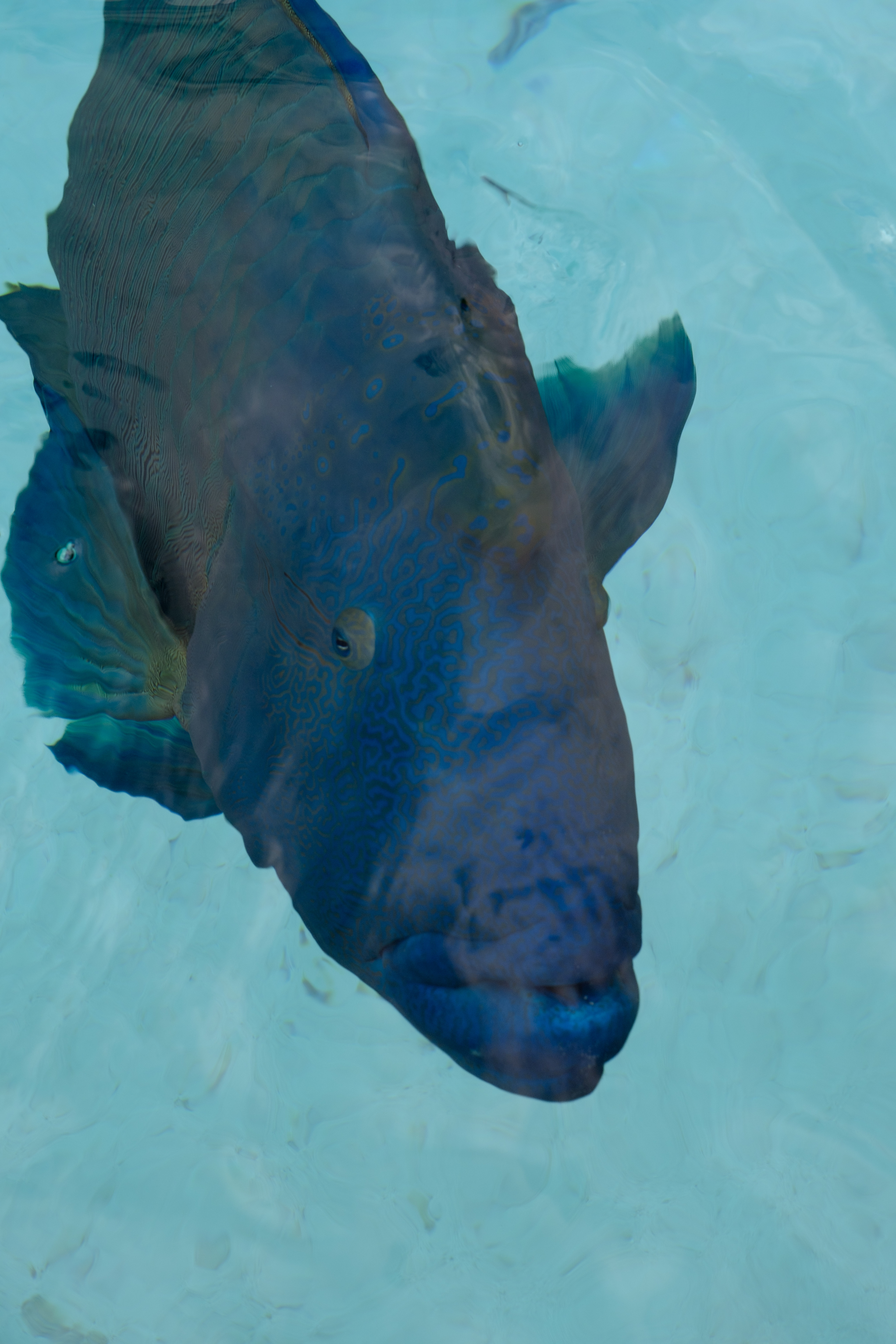
Swimming With Moana: The Napoleon Fish at the St. Regis Bora Bora


The Edit: Moana is a resident Napoleon (humphead) wrasse who lives in the protected lagoonarium on the east side of the St. Regis Bora Bora. This post covers what kind of fish she is, where to find her in the lagoonarium, what the swim is like, and how to reach her as an overnight or day pass guest. It also explains why she swims right up to people and the best time of day to see her with the fewest crowds.
Quick Facts
| Detail | Info |
|---|---|
| Name | Moana |
| Species | Napoleon wrasse, also called humphead or Māori wrasse |
| Where | The lagoonarium on the east side of the St. Regis Bora Bora |
| Resort | The St. Regis Bora Bora Resort, Motu Piti Aau |
| How to access | Overnight stay, or the St. Regis day pass (22,000 XPF, about $220 USD) |
| Cost to swim | Free for resort and day pass guests, towels and entry docks provided |
| Best time to visit | Early morning, around 6 AM, for the fewest people |
| Conservation status | Endangered (IUCN), protected under CITES Appendix II |
| Best for | Families, snorkelers, first-time Bora Bora visitors |

Meet Moana
There is one resident at the St. Regis Bora Bora that our kids talked about more than the pool, the villa, or the unlimited ice cream. Her name is Moana, and she is a fish.
Not a small one, either. Moana is a Napoleon wrasse, one of the largest fish you will ever see on a coral reef, and she lives in the resort’s lagoonarium. Our girls had been asking to meet her almost from the day we arrived, and when she finally cruised into view, she lived up to every bit of the wait.
She is enormous, calm, and completely unbothered by people. At one point one of the girls tossed a little seashell into the water, and Moana moved straight toward it to investigate, which set off a flurry of smaller fish darting around her. That is the kind of moment a kid remembers long after the trip is over.
What Kind of Fish Is Moana?
Moana is a Napoleon wrasse, also called a humphead wrasse or Māori wrasse. They are the largest member of the wrasse family, and big males can reach close to two meters and weigh several hundred pounds. They also live for decades, sometimes more than thirty years, and they tend to stay in one home territory. The fish you meet today may well be the same one guests were photographing years ago.
A couple of facts make her even more interesting once you are in the water. Humphead wrasse have tough, peg-like teeth and powerful jaws built for crushing hard-shelled prey like mollusks, crabs, and sea urchins, and they can even crunch through pieces of dead coral to get at what is hiding inside.
That is almost certainly why Moana chased that seashell. A shell hitting the water looks like lunch to a fish whose whole diet is cracking shells open. They are also one of the only reef predators that will eat the destructive crown-of-thorns starfish, which makes them important to the health of a reef.
There is a conservation side to this too. Humphead wrasse are listed as endangered, largely because they are prized in the live reef fish trade, and they are protected under international CITES rules. Seeing one this close and this relaxed is rare.
Out on an open reef they tend to be wary and keep their distance. Part of what makes the St. Regis lagoonarium special is that Moana has grown comfortable enough with people to swim right up to you.


Where to Find Moana in the Lagoonarium
The lagoonarium sits on the east side of the resort, and the setup is smart. A pipe pulls cooler, nutrient-rich ocean water from the deeper water on the far side of the motu and feeds it into this part of the lagoon, where it moves through and funnels back out toward the St. Regis beach and the breakfast area.
That steady supply of fresh, cooler ocean water is what keeps the whole enclosure healthy and full of life. You can feel the difference too. The water here runs a touch cooler than the warmer lagoon water over by the beach cabanas and the pool bar.
Running alongside the lagoonarium is a short nature walk with four or five stations. Some of the Information boards explain the different corals, and one is all about the humphead wrasse, so you can read up on Moana before or after you meet her.
There is also a footbridge that crosses the water, though it was closed for maintenance during our stay. Our best guess is that it gets closed in the rainy season, since the bridge is curved the whole way across with no flat section and the wood turns slippery when it is wet.
Where to get in
There are a couple of spots set up for swimming. The main one is a dock area with picnic tables, umbrellas, towels, and even a phone you can use to call for a ride back to your villa. You can set your things down there, climb in, and float out to look around. If you follow the path a little farther around the loop, there is a second, smaller spot with a two-person seating area, its own little dock, and a ladder that makes getting in and out easy.
One thing to know before you jump in. The bottom is not uniform. Some areas are shallow and easy to stand in, and others drop off deeper, where it would be hard to climb out without touching down. Keep an eye on younger or less confident swimmers.

What It’s Like to Swim With Her
If you stay in the water long enough, you start to notice that Moana runs a loop. She likes to hang up near the cool water coming in from the ocean intake, which feels a little crisper than the rest of the lagoon, then she swings back down toward the spa side and the bridge before circling around again.
She can probably range farther than that, but those two areas are where we always found her. So if you post up near the intake end, or down by the spa beach and bridge, your odds of seeing her are good. You might even spot her just walking the path, without getting in at all.
She is curious by nature. She will come right up to swimmers, and she is very used to cameras, so getting a photo or video with her is easy. If she is off doing her rounds and you want to draw her over, we noticed that dropping a small seashell into the water near you will often get her attention.
A shell looks like something worth investigating to a fish that spends all day cracking them open. She is a big animal with real teeth, so the move is to let her come to you and enjoy the show.

How to See Moana: Staying Overnight vs a Day Pass
You do not have to be booked into an overwater bungalow to meet her, but how you reach the lagoonarium depends on how you are visiting.
If you are staying at the resort, the lagoonarium is included and easy to get to. The property is large, so most people bike back there. Every villa and bungalow comes with bicycles based on how many people are in the room, and you can ride the path, park your bike near the water, and hop in.
For families staying in the overwater bungalows on that side, it gives you a fun reason to head to the back of the property each day. You can read everything about the property in our full St. Regis Bora Bora review.
If you are not staying overnight, the St. Regis day pass includes lagoonarium access along with lunch, the beach, and the main pool. It runs 22,000 XPF, roughly $220 USD. We break down exactly what is included, how to book it, and the boat logistics in our St. Regis Bora Bora day pass guide.
One tip either way. The lagoonarium is popular, and you will usually share it with other people. The only time we ever had it to ourselves was around six in the morning. If you want quiet water and the best shot at watching Moana do her rounds undisturbed, go early.

Moana the Napoleon Fish FAQ
Moana is a Napoleon wrasse, also known as a humphead or Māori wrasse. It is the largest species in the wrasse family.
She was very much a resident during our stay. Humphead wrasse can live more than thirty years and stay in one home territory, so the lagoonarium has been her spot for a long time.
Yes. The St. Regis day pass includes access to the lagoonarium, so you can snorkel with her without staying overnight.
She is curious and will come close, and she does have teeth built for crushing shells, but she is calm around people and not aggressive. Give her the same space you would any big wild fish and you will have a great time.
Early morning. We had the lagoonarium to ourselves around 6 AM, and that is also a good window to watch her swim her usual loop near the water intake.
Is It Worth It?
Moana is not the reason you book Bora Bora, but she might be the thing your kids talk about the most. Standing in a protected lagoon while a six-foot fish glides up to say hello is the kind of small, specific memory that sticks. It costs nothing extra if you are already staying at the resort, and it is one of the better parts of the day if you come in on a day pass.
If you are mapping out your time in the water, our snorkeling in Bora Bora guide covers the best shore spots and lagoon tours around the island, and our Bora Bora day pass guide compares every resort if you are still deciding where to spend the day. And if you are curious about the island’s other marine life, here is what swimming with sharks and stingrays in Bora Bora is really like.


Curated by us, for you. We may earn a commission on pieces you shop through our links


The Vanity Case
Shop the edit
Just Landed
Shop the edit
Finishing Touches
Shop the edit
Leave a Reply


style
Farm Rio Souvenir Scarves Dress Review: Midsize Sizing, Fit & Vacation Styling testing
style
Vacation Look No. 3 | Farm Rio Golden Nature Maxi Dress Outfit


Have a brand story to tell? We'd love to hear what you have in mind.
And everywhere in between
Bora Bora to Baja


Be the first to comment