
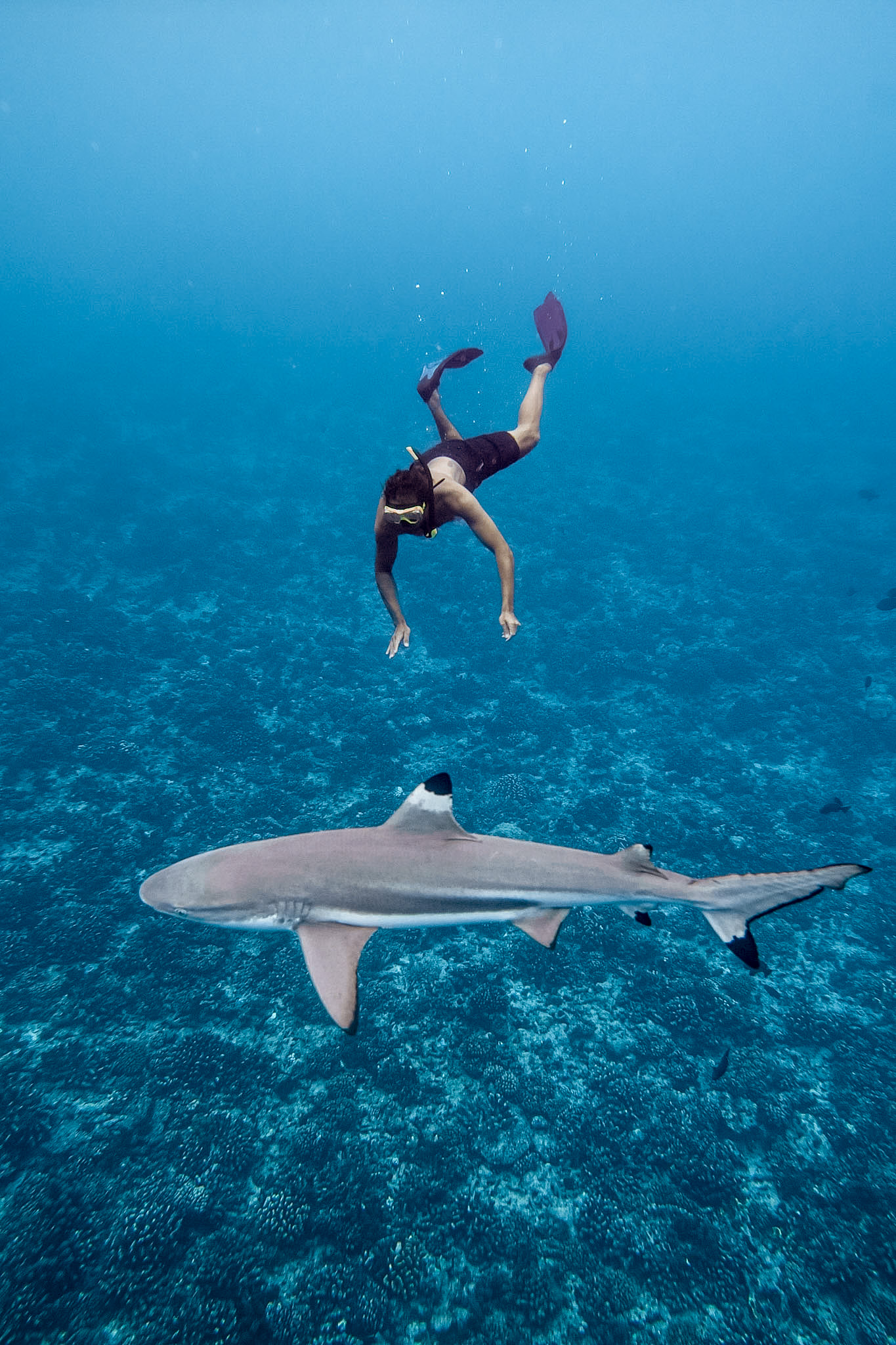
Are There Sharks in Bora Bora? What Swimming With Sharks and Stingrays Is Really Like


The Edit: Yes, there are sharks in Bora Bora, mostly blacktip reef sharks, along with stingrays and the occasional spotted eagle ray, and none of them are the threat first-timers picture. This guide covers what actually lives in the lagoon, whether sharks and stingrays in Bora Bora are dangerous, and exactly where you’ll see them, both on a guided tour and from shore. It pulls from our own encounters across the island, from the Keishi Lagoon Tour to Matira Beach, Anau, and the resort lagoons.
| Quick Facts | Detail |
|---|---|
| Sharks you’ll see | Blacktip reef sharks (common, small, docile). Larger lemon sharks are in the lagoon but rarely seen by snorkelers. |
| Rays you’ll see | Stingrays and spotted eagle rays |
| Are they dangerous? | No, not to snorkelers who keep their distance and don’t touch or chase them |
| Most reliable place to see them | A guided lagoon tour, where the shark and stingray stop is a known, habituated spot |
| Can you see them from shore? | Sometimes. Stingrays and eagle rays, yes. Blacktips, occasionally, usually early morning |
| Where we’ve personally seen them | Keishi Lagoon Tour, Matira Beach, Anau, and the St. Regis and Westin lagoon areas |
| Best for | Nervous snorkelers, families, and anyone deciding whether a tour is worth it |
| Cost to see them | Free from shore. A guided lagoon tour is the reliable option (see our Keishi review for pricing) |

Are There Sharks in Bora Bora?
Yes, and if you’re asking because the idea makes you a little nervous, you’re in good company. It’s one of the most common questions we see from people planning a trip, right up there with what to pack and which resort to book. The short answer is that Bora Bora’s lagoon is home to sharks and rays, you can absolutely swim near them, and the experience is far calmer than the word “shark” makes it sound.
The shark you’re most likely to meet is the blacktip reef shark. They’re small, usually three to five feet, easy to recognize by the black tips on their fins, and they want very little to do with you. There are bigger sharks in the lagoon too, mainly lemon sharks, which can run close to ten feet and even have a few tours built around finding them. You’re unlikely to bump into one while casually snorkeling, and even the big ones aren’t interested in people.
On the ray side, you’ll see stingrays gliding along the sandy shallows and, if you’re lucky, spotted eagle rays, which are the showier cousins with the polka-dotted backs. We’ve run into both in several spots around the island, and they tend to be the highlight of any lagoon swim.

Are the Sharks and Stingrays in Bora Bora Dangerous?
This is the real question behind the question, so here’s our honest take after years of being in this water.
Blacktip reef sharks are not considered dangerous to snorkelers. They’re naturally shy, they keep their distance, and on a tour they’re so used to boats and people that they barely react. We’ve been in the water with them more than once and never felt anything but curiosity, theirs and ours.
The cardinal rules are simple: don’t touch them, don’t chase them, and don’t get between a shark and open water. Give them space and they’ll give you a show.
Stingrays are calm and often weirdly friendly, especially at spots where they associate people with food. The thing to respect with stingrays is the barb at the base of the tail. The rare injuries you hear about almost always happen when someone steps directly on a ray in shallow sand.
The fix is easy: do the “stingray shuffle,” sliding your feet along the bottom instead of stomping, so any ray resting in the sand feels you coming and slips away.
Eagle rays behave much like stingrays. As we always say, the eagle ray’s mouth sits on the front of its face instead of the underside, but they’re in the same broad family, they act the same way, and you’ll find them cruising the same areas. Same respect, same distance, same payoff.
The honest bottom line is that the animals are not the risk. The risk is human behavior, touching wildlife, chasing for a photo, or stomping through shallow sand without looking. Handle yourself well and Bora Bora’s sharks and stingrays are one of the safest wildlife encounters you can have.


Where You Will Actually See Sharks and Stingrays in Bora Bora
Here’s where we get practical, because “are there sharks in Bora Bora” usually really means “where will I see them, and do I have to pay for a tour.”
On a Lagoon Tour (the Reliable Way)
If you want to be in the water with sharks and stingrays on a schedule, book a lagoon tour. Not every tour is worth your money, so it’s worth reading our full guide to snorkeling in Bora Bora before you book anything.
The shark and stingray stops on these tours are known spots where the animals show up consistently. When we asked a local whether the tours feed the sharks and rays the way they do in Moorea, he told us they used to but aren’t supposed to anymore, the goal being to keep the animals wild and untrained.
What does happen is the guides toss fruit like bananas to the reef fish, and all that commotion in the water is what tends to draw the stingrays and blacktips in.
On our Keishi Lagoon Tour, large stingrays glided past almost immediately, followed by blacktip reef sharks calmly cruising the area, all in waist-deep water. If seeing them is non-negotiable for your trip, this is how you guarantee it.
These shark and stingray stops sit at specific spots in the lagoon, not just anywhere. Here is the exact spot we got in the water with them on our tour: our shark and stingray spot on Google Maps. If you’re booking independently or just want to know where the action happens, a couple of other spots tour operators use for their shark and stingray stops are here and here. Save whichever ones help.

Seeing Sharks and Stingrays From the Beach
Off a tour, sightings are more about luck and timing, and they skew heavily toward rays.
At Matira Beach, the public beach most travelers can actually get to, we’ve seen stingrays twice and, on one morning, two eagle rays, along with the smaller tropical reef fish you’d expect on a shallow, warm reef.
We have never seen a blacktip there. Here’s the interesting part, and the honest answer to whether sharks lurk at the swimming beaches: the water at Matira is the same waist depth as where we swam with sharks on the Keishi tour, so a blacktip could physically cruise through.
But Matira has people in it all day, every day, and there’s no real reason for a shark to hang around a crowded stretch of sand. The odds of running into one there during the day are low.
And out at Anau and the Te Faie Aro Ocean Park, on the east side of the island, we’ve seen stingrays coasting the reef and eagle rays working the same water. It’s a quieter, less crowded stretch, exactly the kind of place rays like to comb the bottom for food.
We’ve only ever seen rays here, never a blacktip, though there’s no reason one couldn’t pass through. We just can’t tell you when, because we’ve never caught one in the act.
For DIY shore snorkels like these, your own gear matters even more since there’s no tour outfit handing you a kit. We use the same setup at every beach we hit and broke it all down in our snorkel gear guide.

Sharks and Rays Around the Resorts
The resorts told a similar story. At the St. Regis, we caught a single blacktip in two to three feet of water early one morning, right around the main beach near the pool and the jet ski area. It was barely past dawn, mooring time, nobody in the water, everyone at breakfast, and we were out chasing golden-hour photos.
That timing is the whole point: the beach is busy by mid-morning, but at first light, with the water empty, a shark felt comfortable slipping into the shallows.
Worth noting, the St. Regis lagoonarium, the enclosed swim area where you meet Moana the humphead wrasse, is fully netted and sealed off from the open lagoon, so there are no sharks or stingrays in there. It’s a beautiful swimmable aquarium, just not a shark-and-ray spot.
At the Westin Bora Bora, we watched a spotted eagle ray glide north through the overwater bungalow pylons on our way to dinner, totally unbothered, just doing its evening rounds.
The pattern across all of it: rays are the realistic from-shore sighting, sharks are the lucky early-morning exception, and a tour is the only way to count on both.
Sharks vs Stingrays vs Eagle Rays: A Quick ID
| What you’re looking at | How to spot it | What to expect |
|---|---|---|
| Blacktip reef shark | Small, slender, black-tipped fins | Shy, keeps its distance, common on tours |
| Stingray | Flat, smooth, hugs the sandy bottom, long whip tail with a barb | Calm, often curious, do the stingray shuffle |
| Spotted eagle ray | Polka-dotted back, mouth on the front of the face, “flies” through open water | Graceful, moves more than stingrays, harmless if left alone |
How to See Sharks and Stingrays in Bora Bora
If you take one thing from this guide, let it be this: from shore, sightings are a gift, not a guarantee. If swimming with sharks and stingrays is something you really want to check off, book a guided lagoon tour, where the stops are known, the animals are reliable, and a guide keeps everyone safe and respectful.
Our Keishi Lagoon Tour delivered exactly that, sharks and rays in clear, shallow water, plus a coral garden and a motu picnic.
One thing worth doing before any tour: bring your own mask and snorkel. We always do. Rental gear fits how it fits, and a leaky mask can wreck a once-in-a-lifetime swim with sharks. Here is the snorkel gear we actually use and recommend after six years of full-time travel.


Frequently Asked Questions
Yes. Blacktip reef sharks are the most common, and larger lemon sharks live in the lagoon as well. Stingrays and spotted eagle rays are also widespread.
Not to snorkelers who behave sensibly. Blacktip reef sharks are shy and avoid people. The main cautions are never touching or chasing wildlife and doing the stingray shuffle in shallow sand to avoid stepping on a resting ray.
Sometimes. Travelers occasionally spot larger lemon sharks cruising near the bungalows, and we once saw a small blacktip in the shallows near a resort beach at dawn. They pass through, but they don’t linger where there are crowds, and they’re not a threat to guests.
Yes, and the most reliable way is on a guided lagoon tour, where blacktip reef sharks and stingrays gather at known spots. You can also encounter rays on your own off beaches like Matira, though sightings there are down to luck.
Mostly blacktip reef sharks, with lemon sharks present in the wider lagoon. You may also hear about reef sharks more generally, but blacktips are the ones snorkelers see.
No, but a tour is the only way to count on it. From shore you’ll most likely see stingrays and eagle rays, and only occasionally a shark.
The Other Gentle Locals You Might Meet
Sharks and rays get the headlines, but they aren’t the only thing worth watching for, and most of what shares the lagoon with you is even friendlier. The shallows are full of small tropical reef fish, and if you’re patient you can stumble onto something special.
We saw our first wild octopus ever at the Westin, sitting in barely two feet of water right off the beach near the pool and the beach bar. When we got close it flared out, fanned its tentacles, and rippled through a few colors, which is exactly what they do when they notice people nearby.
The InterContinental Thalasso had one living in its lagoon too, tucked into a little channel. None of this is anything to fear. If sharks were your worry, it helps to remember that the lagoon is mostly a gentle, curious place, and the surprises tend to be the good kind.
The Honest Bottom Line
If the sharks are the reason you’ve been hesitating about Bora Bora, let them go. The lagoon is one of the gentlest places we’ve ever gotten in the water with sharks and rays.
Treat the animals with respect, keep your hands to yourself, shuffle your feet in the shallows, and the worst thing that happens is you walk away with a better story and better photos than you expected. Book a lagoon tour if you want the sure thing, and keep your eyes open at the beach for the bonus sightings.


Curated by us, for you. We may earn a commission on pieces you shop through our links


The Vanity Case
Shop the edit
Just Landed
Shop the edit
Finishing Touches
Shop the edit
Leave a Reply


style
Farm Rio Souvenir Scarves Dress Review: Midsize Sizing, Fit & Vacation Styling testing
style
Vacation Look No. 3 | Farm Rio Golden Nature Maxi Dress Outfit


Have a brand story to tell? We'd love to hear what you have in mind.
And everywhere in between
Bora Bora to Baja


Be the first to comment