





saltyvagabonds
Saltyvagabonds
Destinations

Asia
Bali
Japan
Korea
Malaysia
singapore
Thailand
Vietnam
Europe
Germany
France
U.K.
North America
Canada
Mexico
Oceania
Polynesia
Micronesia
Hawaii
Guam
Indonesia
All Travel Blogs
Travel Tips
Planning
About us
usa
Destinations
Travel Tips
Planning
About us
All Categories
Travel Tips
Worldschooling
Digital Nomad
Travel Hacking
Travel with kids
Lifestyle
Military Travel
Packing
All Travel Tips
Tech

Travel Hacking with
Chase Points
Military Space A Flights
Guide









The Real Military Hops Packing List (From an Air Force Veteran Family)
Forget the generic packing checklists copied from someone who has never flown one. This is what our family actually carries on military hops, written from real flights, two TSA jelly confiscations, and the reality that some routes have stopped offering the $6 onboard meal. Built to make sure no one swears “never again” after their first flight.

If you click on links we provide, we may receive compensation.


The Edit: This is the firsthand military hops packing list from our retired Air Force family of 4, drawn from 26+ flights since December 2016 across aircraft including the C-17, C-5, KC-135, KC-10, and Patriot Express, with routes reaching as far as Singapore via Hawaii, Guam, and Yokota Air Base. It covers the snack bag rule of 2,000 calories per person, the 3 layer clothing system, the self-inflating sleeping pad we use for cold cargo floors, layered ear protection options, the updated 2026 ID rule requiring dependents 10 and over to carry their own USID, and the 2026 reality that the Travis to Hawaii route has stopped offering the $6 onboard meal. Includes terminal cafe details for Travis AFB (Kado’s Asian Grill) and Hickam AFB (Full Bird Cafe by Drive Thru Joe), military TSA liquid enforcement notes from two confiscated jellies, and the fact that many AMC passenger terminals no longer operate 24/7.
At a Glance
| Military Space-A Family | Details |
|---|---|
| Who we are | Retired Air Force family of 4, full-time travelers since October 2018 |
| Military hops flown | 26+ since December 2016 |
| Furthest reach | Singapore (via Hawaii, Guam, and Yokota Air Base) |
| Longest single leg | Yokota Air Base to Travis AFB, roughly 10 hours direct on a KC-135 refueler |
| Savings reality | Varies wildly by route. We have saved thousands on flights to Guam, Japan, and Singapore. Stacks per person AND per leg |
| Checked baggage | 2 bags at 70 lbs each, free |
| Carry-on reality | A backpack is plenty. Your checked bags travel with you on the same plane and are waiting when you deplane |
| ID rule (updated) | Simplest move: get every dependent their own USID and skip the paperwork shuffle. Required for ages 10 and up regardless |
| Shoe rule | Closed-toe and closed-heel required. No Crocs, sandals, flip-flops, or heels |
| Liquid rule | Military TSA on base follows civilian TSA rules. We have lost fancy jelly twice. Squeeze pouches always pass |
| Meal reality (2026) | Travis to Hawaii flights have stopped offering the $6 box meal. Assume zero meal service on any gray tail flight |
| Snack bag minimum | Alex’s rule: 2,000 calories per person on your body before boarding |
| Bathroom water | The lav flushes work and the drinking igloo is fine. The sink water often does not flow. Hand sanitizer is mandatory |
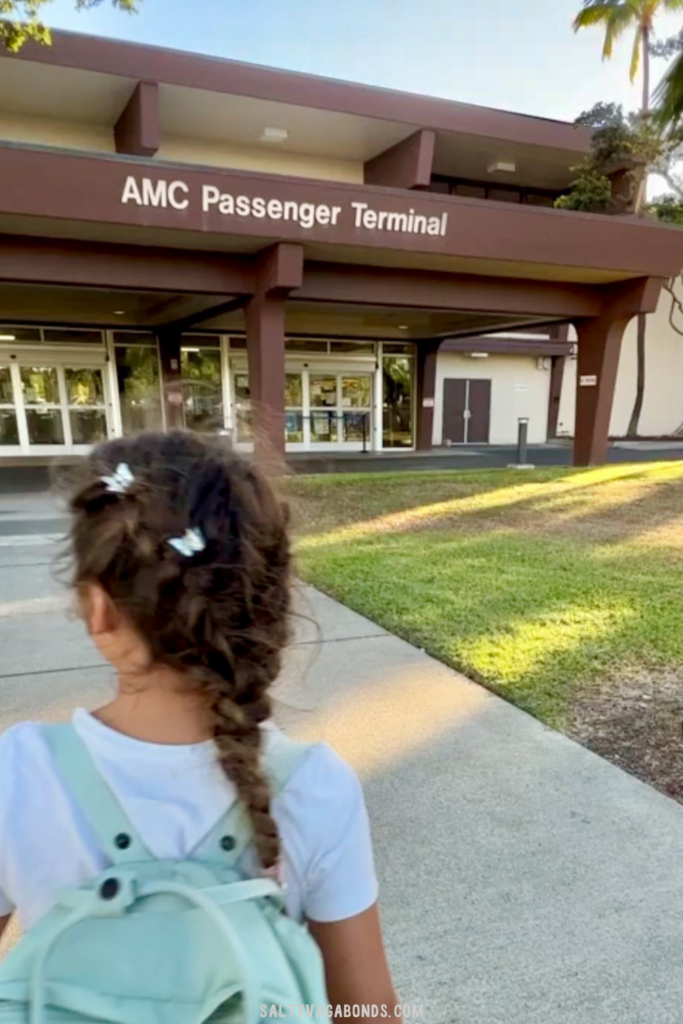
| Terminal hours | Many passenger terminals no longer stay open 24/7. Confirm hours before you go |
| Hydration code | Code SALTYVAGABONDS for Taste Salud electrolytes (zero sugar, kid approved, packs flat) |
| Aircraft you might catch | Patriot Express, C-17, C-5, KC-135, KC-10, KC-46, C-40, occasional 757-200 Combi |
Welcome (if the video sent you here)
If you just landed here from our video, hey, welcome. This is the packing list we actually use for military hops (also called Space-A flights, though we’re done calling them that). Our family has flown 26+ of these since December 2016, and PEOPLE Magazine featured our family’s military hops Disney Cruise trip in May 2026. So this list is built from real flight lines, real layovers, and real meltdowns. Not from a Google search.
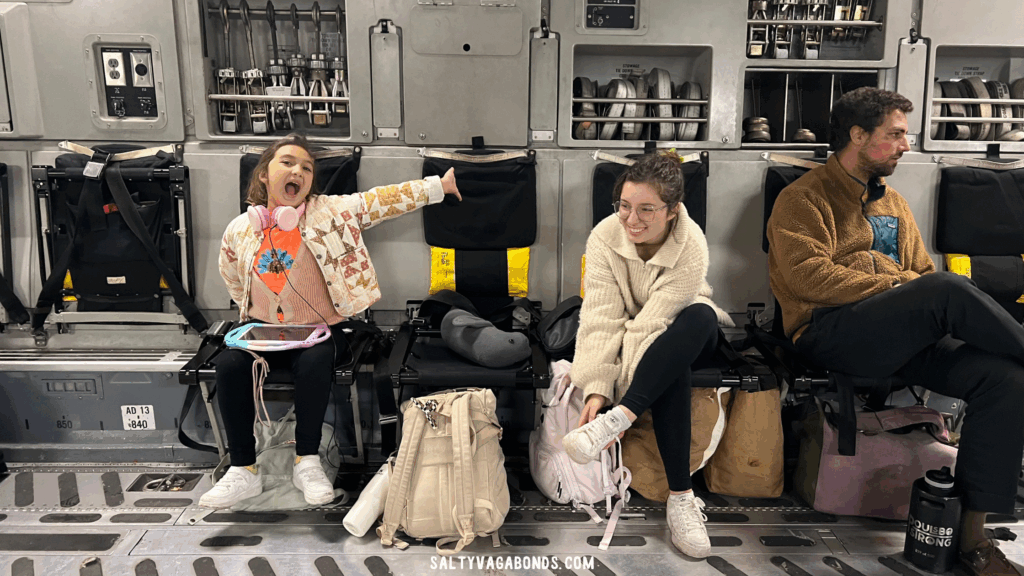
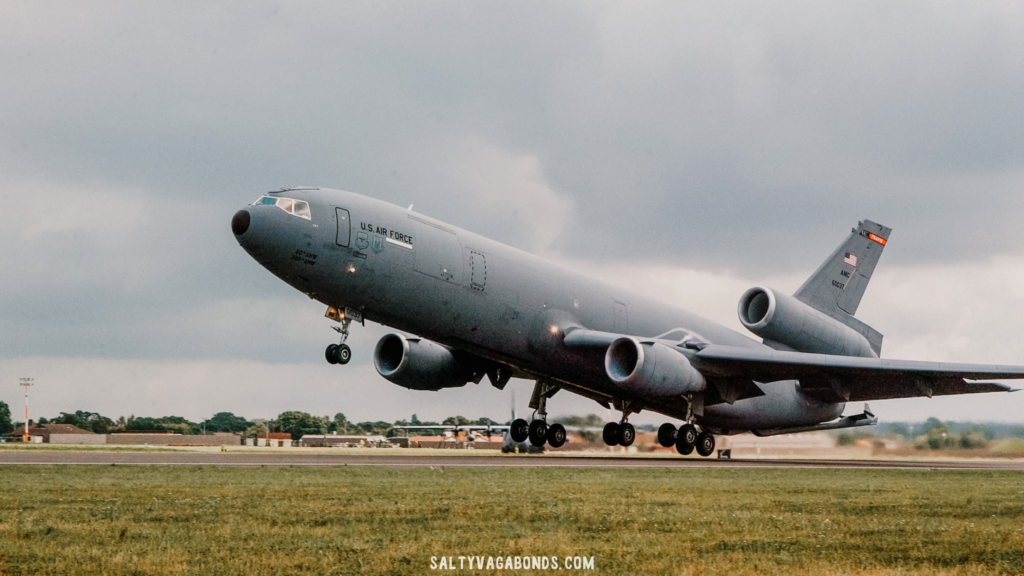
The single most important thing to understand before you read another word: you cannot confirm what aircraft you will be on until roll call. A Patriot Express annotation gives you a hint that you might end up on something commercial style, but it can swap to a gray tail at the last minute. A gray tail (a C-17, C-5, KC-135, KC-10, etc) is a working military aircraft. No flight attendants. No meal service. No running water at the sink. Web seats or a cold metal floor.
So we pack for the harder scenario every single time. If we end up on a Patriot Express, the extra gear stays in the bag and we are extra comfortable. If we end up on a gray tail, we are the family that planned for it. That is the whole philosophy. The rest of this post is how we execute it.
The Two Worlds: Patriot Express vs Gray Tail
Patriot Express: the commercial style hop
A Patriot Express (PE) flight is a commercial charter that AMC contracts to move large groups of personnel. From a passenger experience standpoint, it looks and feels almost identical to a regular commercial flight. Real seats. Bathrooms with running water. A meal service. Bottled water passed around. If you have only flown commercial, this is the closest thing to that experience.
The catch: the aircraft can change. Last minute swaps happen, weather happens, mechanical issues happen. We have read PE on the schedule and ended up on something else. So even when you see PE on the board, you still pack like a gray tail could show up. Heads up that Patriot Express service has been cut on certain Europe routes, which is changing the landscape for OCONUS families.
Gray Tail flights (C-17, C-5, KC-135, KC-10)
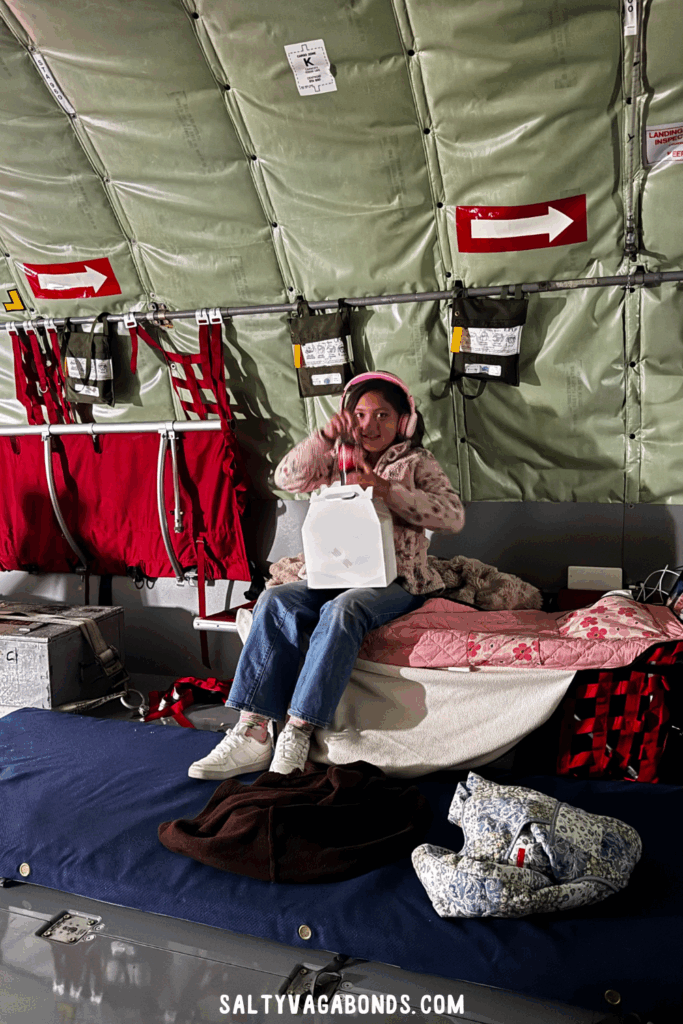
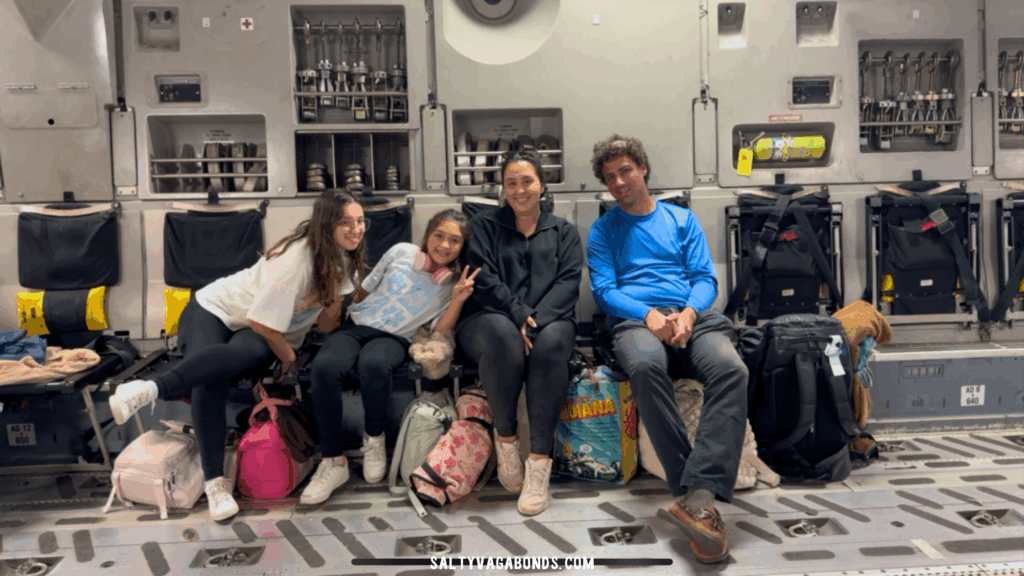
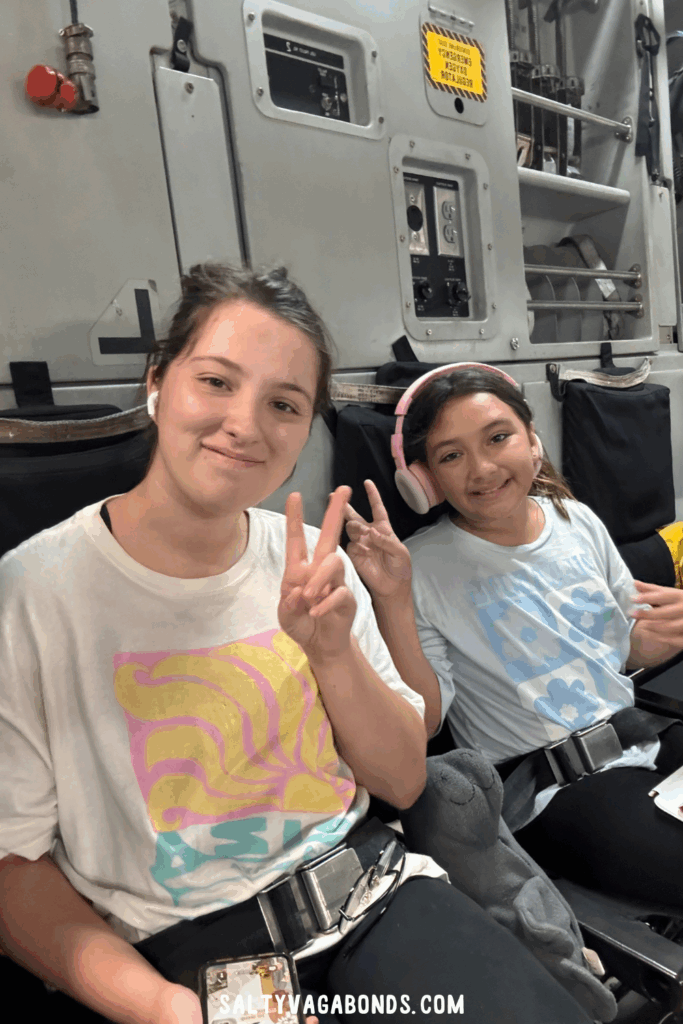
A gray tail is a working military aircraft that the crew has space available capacity on. You are riding in the same aircraft that hauls equipment, refuels fighters mid-air, or moves personnel. There are no rows of cushy seats. You are sitting in web seating along the sidewalls or, if you are lucky enough to be on a C-17 with extra space, you can spread out on the floor. There is no flight attendant. There is no inflight meal cart. The bathrooms are functional but the sink water often does not flow. The cabin is deafening, sometimes cold, sometimes weirdly hot.
This is also why people love them. A gray tail can take you across an ocean for the cost of getting yourself to base. We have flown them as far as Singapore (via Hawaii, Guam, and Yokota Air Base) and home from Yokota direct to Travis on a KC-135. That last one was roughly 10 hours, our longest single leg.
Pack for the gray tail every time
You will not know which one you got until roll call. So we pack for the gray tail every single time. New to the whole process? Start with our Ultimate Military Hops Guide and how to read flight schedules, then come back here for the packing.
Documents and Paperwork: Don’t Get Bumped Over a Missing Form
The fastest way to get pulled off a flight at the manifest desk is missing paperwork. Here is what we keep ready, every single time.
IDs for everyone in your group
Every traveler 10 and over needs a U.S. Uniformed Services ID (USID). Our honest advice: if you have dependents under 10, just get them their own USID anyway and skip the paperwork. It is the simplest move. If you cannot, kids under 10 need a Federal-, State-, local-, or tribal government-issued ID along with a MilConnect printout showing their DoD ID number.
This rule changed in recent years (it used to be 14 and over), and we have a dedicated post on the new ID rules if you want the full breakdown. If you are not sure where your dependents stand, call your local ID card office before you sign up for a flight, not after.
The other paperwork
Active duty travelers need their leave form or Environmental Morale Leave (EML) orders. A spouse flying solo with an active duty sponsor needs the command sponsored or deployed verification letter. Anyone going OCONUS needs passports for every family member, even babies. We also bring printouts (or at least screenshots) of our terminal signup emails, because they are proof of your signup date and time.
Closed toe shoes (this is a rule, not a suggestion)
You will not board any military aircraft in Crocs, sandals, flip-flops, or heels. The shoe rule is non negotiable. Wear something with a closed toe and a closed heel that you can walk in for hours. Pack the cute stuff in your checked bag.
The Snack Bag: The Most Important Section in This Post
If you skip everything else in this post, do not skip this. Most of the families we have seen swear “never again” after their first hop got miserable because they were not prepared for the food situation. The single thing that separates a survivable flight from a brutal one is the snack bag.
Why the snack bag is non-negotiable
A few realities you need to know going into this.
The $6 onboard box meal is not guaranteed. Some flights offer it when you check your bags, some do not. Recent Travis to Hawaii flights have stopped offering it entirely. Our best guess is that the flight time falls just under the threshold that requires the crew to offer food, so they just don’t. Either way, you cannot count on it.
Even when food is “offered” on a gray tail, it might just be a small bag of chips and a soda at altitude. That is not a meal. That will not get a kid through a 10-hour flight.
Then there is the roll call wait. Roll call typically starts about an hour before the actual show time, and then you can sit in the terminal for another 3 hours before the aircraft even pushes back. Add a long flight on top. Add a layover where you can’t deplane. Add an arrival at 2am in a city where everything is closed.
The most extreme example from our own travel: we flew home from Kadena Air Base in Okinawa back to Hawaii on a flight that had an undisclosed stop in Guam. Nobody could get off in Guam. We sat on the ramp for 2 to 3 extra hours with no food offered, no ability to buy any, and then flew the second leg. Add the 3-hour pre-flight wait at Kadena. Add roll call. Add the leg one flight time. Add the Guam delay. Add the leg two flight. We landed in Hawaii at a weird hour having gone close to 12 hours without a proper meal.
We got through it because we had stocked up at a gas station before we left, and our friends’ husbands had dropped off fresh food. The kids ate. Nobody melted down. If we had been winging it on a granola bar each, that day would have broken us.
Alex’s rule, after all of this: minimum 2,000 calories per person on your body before you board. Not in your checked bag. On your body, in your carry-on, ready to eat at any point.
What actually works in the snack bag
We pack in two layers. Fresh stuff goes first because it spoils, then shelf stable as a backup that can last days.
Fresh layer: hard-boiled eggs, cheese sticks, fresh fruit, sandwiches made before we left, pre-cut vegetables, anything from the fresh section at the base mini-mart or a gas station on the way to the terminal. You can absolutely bring all of this through security and eat it on the plane. Just know that you cannot carry fresh fruit, meat, or produce OFF the plane into another country (customs rules, not Space-A rules). Eat it before you land OCONUS.
Shelf stable layer: meat sticks, beef jerky, nuts, dried fruit, protein bars, squeeze pouches of peanut butter, crackers, instant coffee packets (the little single-serve ones make a long terminal wait feel almost civilized). Sugar in moderation, but not as the main fuel, because a sugar crash on hour 6 of a flight is its own kind of misery.
If your base offers DoorDash and you have time at the terminal, that is also fair game. So is grabbing something from the BX or the terminal cafe before show time if it’s open.
The Jelly Story: military TSA follows TSA rules
The piece nobody warns you about: yes, military TSA on base follows the same liquid rules as civilian TSA. We have lost fancy French preserves (the kind with the red gingham lid that looks like it came out of a pie shop) twice at the security checkpoint on base. They consider jelly a liquid because it is technically a gel, even though it is in a glass jar and looks like a solid.
If your snack bag plan involves PB&J, bring the peanut butter in squeeze pouches and skip the jelly jar. Or buy squeeze pouch jellies designed for travel. They have always made it through for us.
The squeeze pouch rule applies to anything jelly adjacent: applesauce, yogurt tubes, baby food pouches. Pouches are fine. Jars are a coin flip.
The MRE move (the move not enough families know)
If you want a hot meal on a flight that does not offer one, you could always throw back and grab a few MREs. You can buy them at the commissary if you have time, or MREs (two-day or same-day delivery in a lot of areas). They come with a self-heating mechanism that works on the aircraft. Every military member knows how to use one. They are the cleanest “real meal” option for a gray tail.
Backpacker meals technically work too, but they need hot water, and you are not getting hot water on a gray tail unless you brought a thermos full of it from the terminal. Not realistic. MREs win.
Hydration: refillable bottle + electrolyte mix
The drinking water situation on a gray tail is actually fine. There is a self-serve igloo of water on every flight we have been on, so you can refill all you want. The bottle is the move. We use collapsible folding water bottles that pack flat in the bag and clip to the seat webbing once filled.
For electrolytes, we pack Taste Salud because it has zero sugar and the kids actually like the flavors. Plane air is dry, flights are long, and a sugar bomb drink will crash you. Salud is what we reach for, and our discount code stacks if you want to try it.
💖 Code SALTYVAGABONDS at TasteSalud.com for a discount on your first order. Read our full Taste Salud review for what we actually use and why.
The Core Kit: What You Pack No Matter What Aircraft
These are the items that come with us on every single flight, Patriot Express or gray tail. The “you will need these regardless” pile.
Ear protection (layered approach)
Military aircraft are loud in a way that is hard to describe until you have sat in one. The crew passes out free foam earplugs before takeoff, usually the bright yellow 3M ones, and sometimes the terminal stocks them in the waiting room after security. Alex’s tip: grab a couple of pairs. If you have not cleaned out your ears in a while, the first pair can come out a little gnarly, and you do not want to put that back in.
For our family of 4, we layer it. Amanda, Alex, and Addy all carry Apple AirPods Pro. Active noise cancellation is the move because it cuts the engine drone without making your ears hurt the way pinched foam plugs do after 8 hours. They are also tiny, so they don’t take up bag real estate. Both Amazon and Target run real discounts on these regularly, so we link both. Use whichever rewards or gift cards you have.
For Audrey, we use over-ear kid earmuffs because foam plugs don’t fit small ears well. The earmuffs are more comfortable for her, she keeps them on, and they actually block the engine noise at the volume that matters for protecting little ears. If you have a kid under about age 8, get them earmuffs. Trust us on this one.
Battery banks (real talk on lithium safety)
A battery bank is non-negotiable. The terminal might have a handful of outlets for dozens of people competing for them. Some aircraft have outlets, but do not count on them, especially on a gray tail.
We use Anker battery banks and they have been outstanding. Ours are 6 to 7 years old at this point and they are starting to swell, which is the lithium battery’s way of telling you it is at end of life. When that happens, the safe move is to retire it and buy a new one. Any lithium pack will eventually do this. It is normal. Just do not ignore a swollen battery.
Our next set is going to be a model with USB-C input AND output, which means one cable and no adapter dance. If you are buying new, get USB-C in both directions.
Pre-downloaded entertainment
A gray tail has no in-flight entertainment system. Patriot Express might. Either way, plan for none and you will be set. Download everything you want to read, watch, or listen to BEFORE you leave the house. Terminal WiFi is famously unreliable. Half the time you cannot pull down a single episode of anything, and you definitely cannot stream.
What we download: Disney+, Netflix, Hulu, audiobooks, podcasts, the whole library. Audrey is also a heavy Libby user, which is the FREE app that lets you check out e-books and audiobooks from a public library. MWR libraries on most bases give you a free library card if you do not already have one, which gets you Libby access for free. Add Epic for kids’ books on top of that.
For readers, the Kindle Paperwhite is our go-to. The backlight matters more than you’d think because a gray tail cabin is dark after takeoff, and the Paperwhite means you can read without using a flashlight or annoying the people next to you.
Hand sanitizer and wipes (the lav reality)
The thing nobody tells you: on a gray tail, the bathroom flushes work, the drinking water igloo is fine, but the sink water at the lav often just does not flow. Which means nobody is washing their hands. Including the people who just used the bathroom and are walking back to the seat next to yours. If that is going to bother you, and it will, pack hand sanitizer.
We also pack wipes for the kid mess, the meal mess, and the general “we have been awake for 18 hours” mess.
A small flashlight
A gray tail goes dark fast after takeoff because there are usually only a few small windows. Walking through the cabin means stepping over tie-down straps and cargo cables. A small hands free flashlight (a headlamp works) keeps you from tripping in the dark. Cheap to buy, weighs nothing, lives in the bottom of the bag.
Carabiners and D-rings
A few carabiners clipped to your backpack are the most underrated item on this list. On a gray tail, you can clip your bag directly to the red web seating so it doesn’t slide during a tactical takeoff. You can also hang water bottles, neck pillows, and snack bags off your gear. They cost almost nothing and you will find a use for them every flight.
What to Wear: The 3 Layer System
Cabin temperature on a military aircraft is unpredictable. Sometimes it is freezing. Sometimes it is weirdly hot. You also can’t access your checked bags in flight, even when you can see them strapped down on the pallet right in front of you. Anything you might need has to be on your body or in your carry-on.
The 3 layer system that actually works
Everyone in our family wears the same setup: a t-shirt base, a sweatshirt or thin fleece in the middle, and a packable jacket on top. Three layers, that is it. Three pieces, all dual purpose, all packable.
Base: long sleeve or short sleeve cotton or moisture wicking t-shirt. If you only have one warm layer with you on the plane, this is the one that will get sweaty during the terminal wait, so pick something breathable.
Middle: a sweatshirt or thin fleece. This is the one we wear most of the flight. Pull it off if the cabin gets hot, put it back on when it cools down.
Outer: a packable lightweight jacket or rain shell that compresses small. You don’t need it to be heavy. You need it to add a warm layer when the cabin is at its coldest, usually mid-flight at altitude.
Pants, socks, shoes
No shorts. Even if you usually run hot, gray tail cabins get cold enough that bare legs are miserable. Comfortable pull on travel pants with an elastic waist are our family uniform. Wool socks if your feet get cold easily. And closed toe, closed heel shoes, because it is the rule.
The Gray Tail Indoor Campsite: The Gear That Earns Its Spot
If you only had to fly Patriot Express, you could probably skip this whole section. But you cannot guarantee that, so we pack the campsite kit every time. On a long haul gray tail, this is the difference between sleeping for 6 hours and sitting bolt upright in misery for 10.
Self-inflating sleeping pad (the cold floor barrier)
The floor of a C-17 is metal. It gets cold. Cold enough that if you lay down on it without a barrier, you cannot sleep, you cannot warm up, and you will get up sore. The sleeping pad’s only job is to be that barrier.
The one we use is a self-inflating sleeping pad (not a separate hand pump, the pad itself self-inflates as you squeeze the bottom corner, which is way easier than blowing it up at altitude). We bought ours off Amazon a little over a year ago, it has held up through our full-time travel, and it packs down small enough to clip to the outside of a backpack with one of those carabiners. It is overkill for a 3 to 4 hour hop, but on a 10+ hour flight, it is the most important item in our entire kit.
We carry one as a family of 4 and rotate. One person sleeps on the pad on the floor, the other three sprawl on web seats or benches. If you are flying as a one time round trip and you have room in your luggage, families can comfortably do one pad per kid. If you are full time traveling (like us) and minimizing weight, one is enough and you take turns.
Travel blanket or lightweight sleeping bag
Pair the pad with a compact travel blanket or lightweight sleeping bag that has a compression sack. The compression sack is what makes it work because it shrinks down to about fist-size in the bag, which means you can pack it on every flight without it taking up real estate. Doubles as a kid wrap during cold layovers at the terminal.
Dual purpose travel pillow
Get one that works two ways. A neck pillow shape for when you are sitting upright (Patriot Express, KC-135, KC-10), and a rectangular shape for when you are lying flat on the floor of a C-17. The inflatable dual-shape pillow folds into a tiny shape and weighs almost nothing.
Quick dry microfiber towel (optional)
Some terminals have showers. We have seen them. We have not personally used one yet, but the option is there if you have a long layover and you can stay in the terminal during open hours. Heads up: most passenger terminals no longer stay open 24/7 the way they used to. The old play of “show up the night before and camp out for the 4am roll call” does not work in most places anymore. Plan your shower for the short window between getting selected and going through security, not for an overnight terminal stay.
If you do plan to use a terminal shower, throw a quick-dry microfiber towel in your bag. They fold down to nothing.
For Families Traveling With Kids
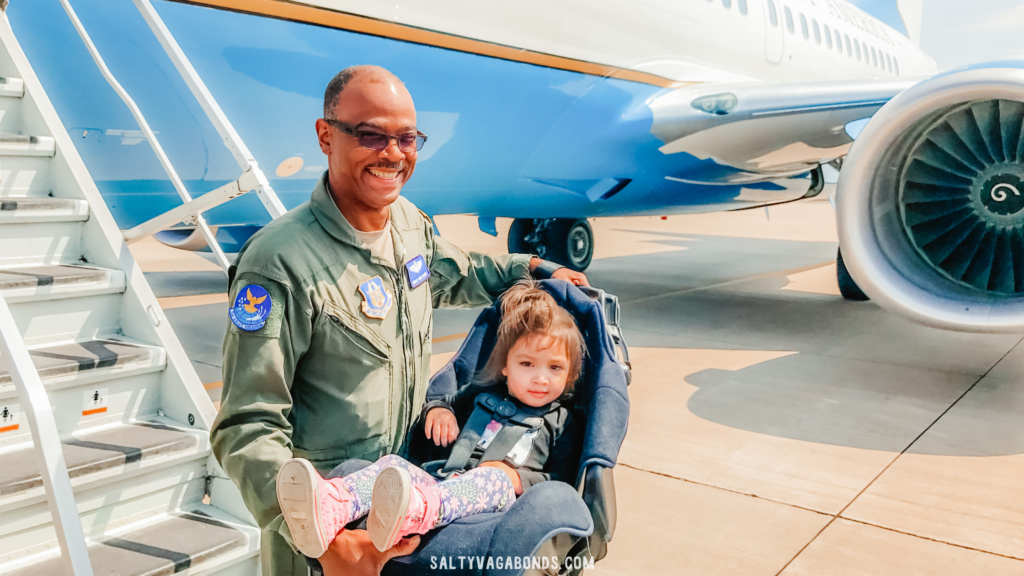
Most of this list is for everyone. This section is the add on for parents. We have flown all 26+ of our hops with our daughters, so this is the lived-in version. For the full kid specific behavior playbook, head to our Flying With Kids post.
The kid snack strategy
Same rules as the adult section, scaled. Pack a snack bag PER KID. Variety matters more than volume. Squeeze pouches (peanut butter, applesauce, yogurt tubes, fruit) make TSA easier and keep the mess down. Avoid anything with red dye or extreme sugar, because the crash on hour 6 is not a vibe.
Kid sleep setup
If you can, bring a kid travel nap mat or a second sleeping pad for the kid most likely to actually sleep. Pair it with a familiar small blanket or stuffed animal because the cabin is loud and unfamiliar, and a comfort object goes a long way.
Quiet entertainment
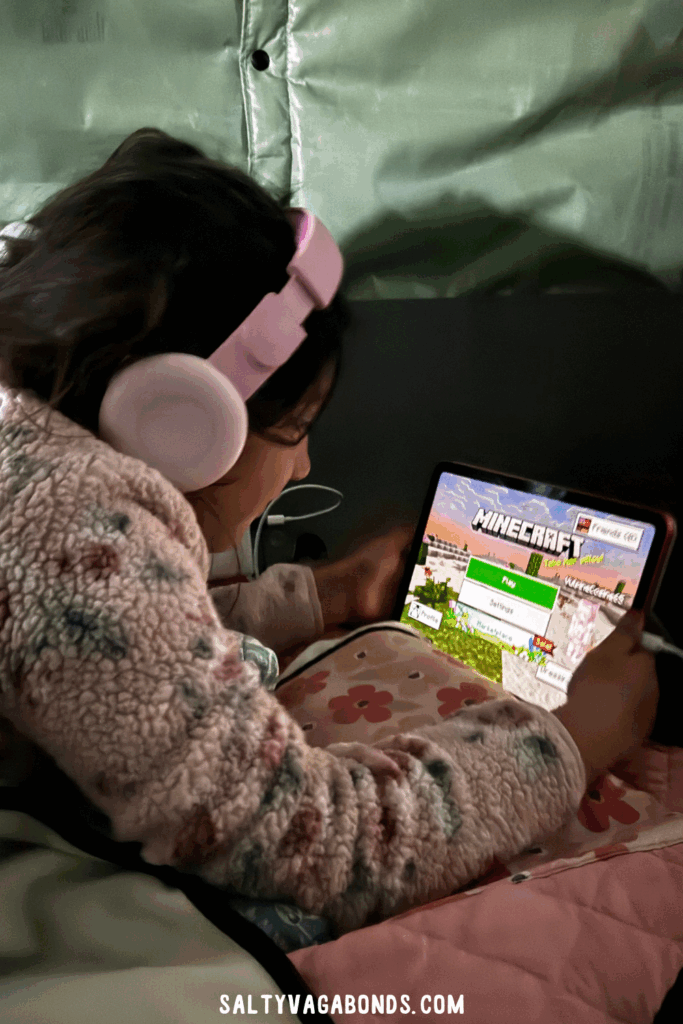
Pre-load the tablet (Libby, Epic, Disney+, downloaded Netflix shows), and keep one or two analog options as backup. Paint by Sticker books and Activity Books both travel well, make no noise, and don’t have small pieces that disappear into seat webbing. Pair with the kid earmuffs from the ear protection section.
Bags: What to Actually Carry
This is where we go against the conventional commercial flying wisdom, because military hops are not commercial flying.
You do not need a rolling carry-on
A military hop handles bags more like flying private than flying commercial. Your checked bags get loaded directly onto the same aircraft you are riding on. We have never seen anyone lose a bag. When you deplane, your bags are right there waiting, sometimes on a pallet you can see from your seat. There is no baggage claim chaos. No “I have to keep this carry-on with me at all costs in case the flight crew rebooks me on a different route.” That just doesn’t happen.
Which means dragging a rolling carry-on with you onto the aircraft is mostly just extra hassle. You have to lug it through security, onto the shuttle bus that drives you to the aircraft, up the ramp, and find somewhere to strap it down so it doesn’t slide during a tactical takeoff. Skip it.
A backpack is plenty
Most experienced military hops travelers carry a single backpack with their in-flight essentials (snack bag, layers, sleep gear, electronics, documents) and check the rest. You get 2 bags at 70 lbs each, free. Use the allowance. If you want to organize the checked bag better, our packing cubes post is what we use.
If you insist on a rolling carry-on
Make it small enough to fit under the jump seat (smaller than commercial carry-on standards, jump seat space is tight) and bring a carabiner to lock it to the web seating so it doesn’t slide. If it is too big or starts moving around, the crew will just strap it down with the rest of the cargo, and you will not see it until you land. So if you need access to anything during the flight, that anything goes in a backpack, not in the rolling bag.
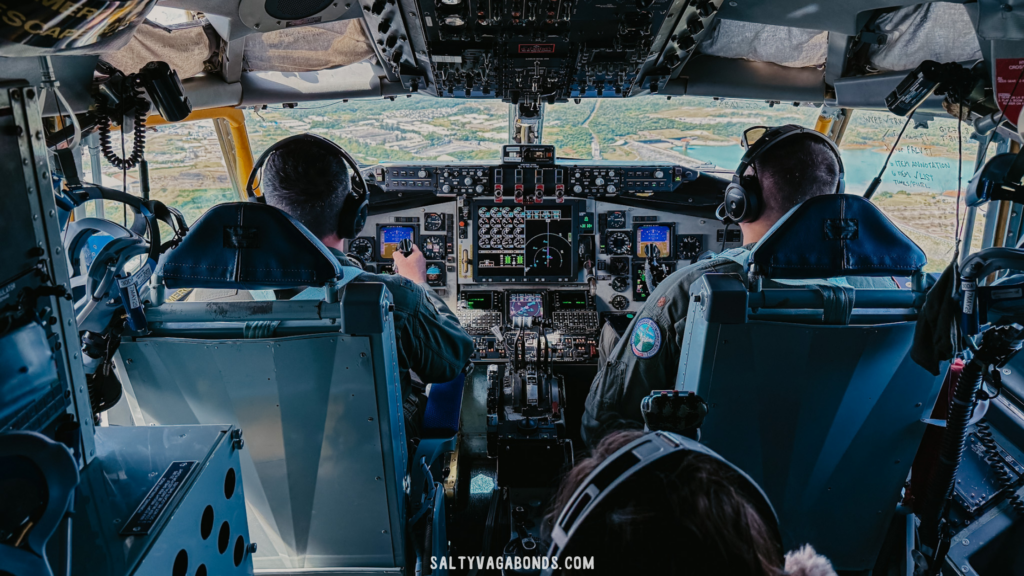
Terminal Survival: Food, USOs, Showers, and the Closed Overnight Reality
Where you wait matters almost as much as what you packed.
Food at the terminal varies wildly
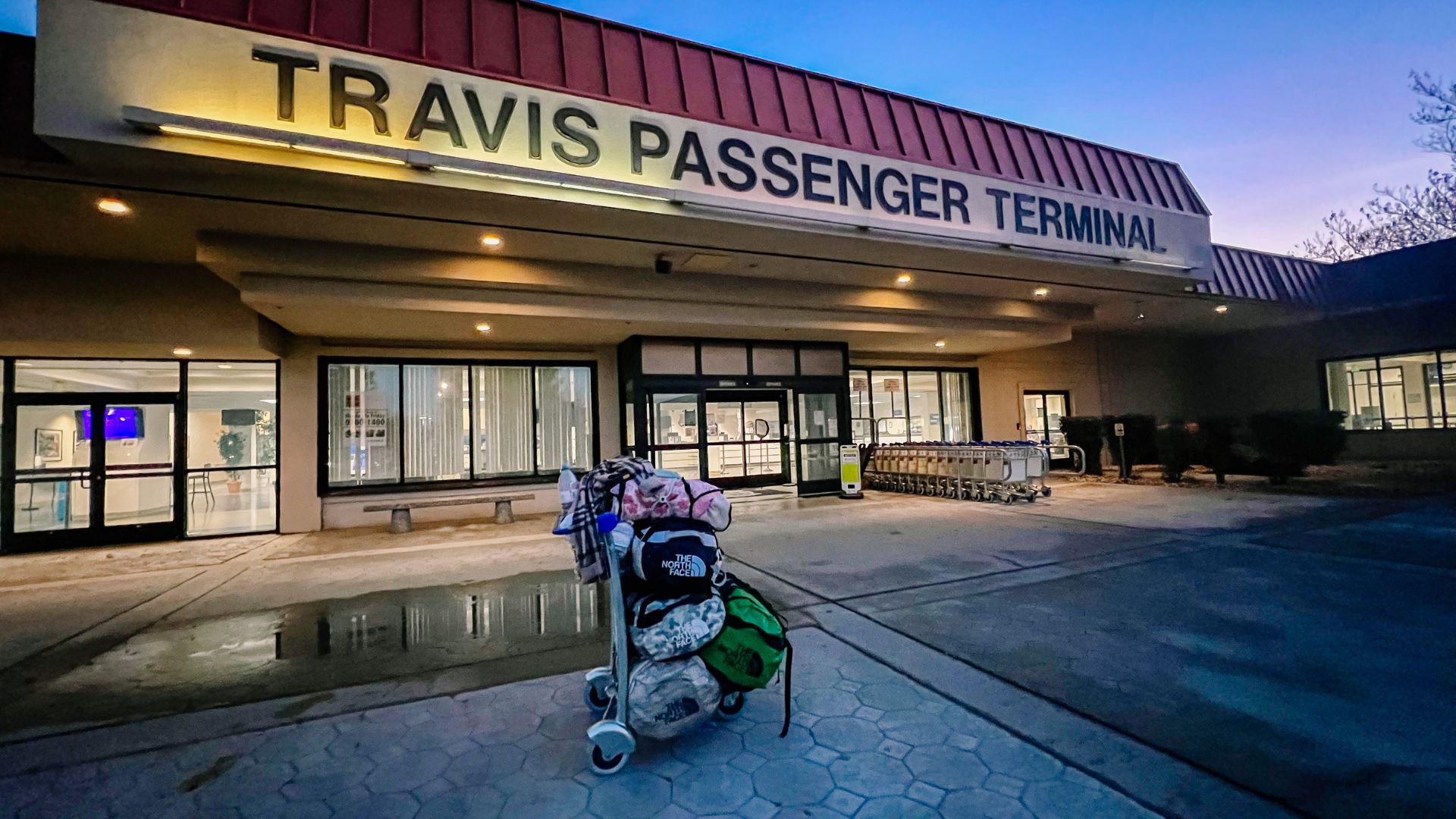
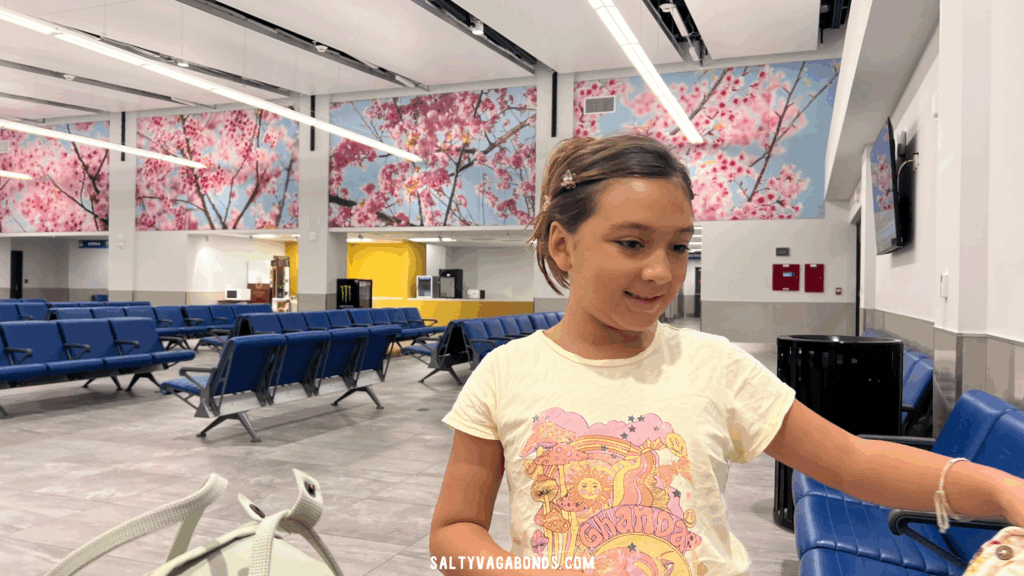
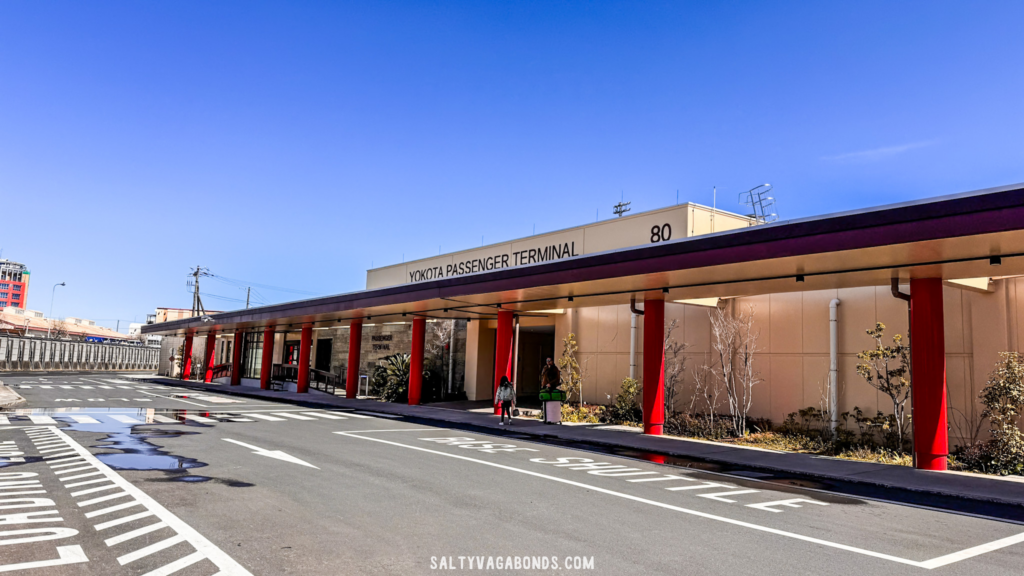
Travis AFB has Kado’s Asian Grill on base. It is genuinely good. We have eaten there multiple times. Hickam AFB on Oahu has the Full Bird Cafe by Drive Thru Joe, also great, also part of our regular pre-flight routine when we are flying out of Hawaii. Yokota AB has a burrito food truck that rolls through in the morning and is somehow always exactly what you needed.
All of these have limited hours. None of them are 24/7. If your flight rolls in or out at 2am, you are out of luck on the cafe option, which is exactly why the snack bag matters.
USO is your friend
Most major bases have a USO (United Service Organizations) lounge in or near the passenger terminal, and almost all of them put out free food in some form. We have been fed at the JBLM USO and the Hawaii USO without ever asking. They are also a great spot to charge devices, let kids burn off energy, and get out of the terminal chairs for a bit. Always check for the USO at any base you transit.
DoorDash on base
Some bases allow DoorDash drop-off and some don’t. Check your specific base before you count on it. If it works, it is a lifeline during a long pre-flight wait, especially if the terminal cafe is closed and you forgot to top off the snack bag. Not every base allows it, so do not make it Plan A.
The closed overnight reality
Most passenger terminals no longer stay open 24/7. From what multiple terminal staff have told us, this is because of the post-COVID homeless retiree situation. Veterans without housing were sheltering in terminals overnight, and most bases now close their passenger terminals during certain overnight hours.
What this means for you: the old “show up at 6pm the night before and camp out for a 4am roll call” play is dead at most terminals. If you are arriving the night before a flight, you need lodging. Check the terminal’s specific hours BEFORE you finalize your plan, not after you arrive at 11pm with two kids and a closed door.
The Snack Bag Video (coming soon)
I have a video coming out specifically on what’s in our snack bag, with a closer look at exactly which protein bars, which squeeze pouches, and which gas station scores have saved our flights. When it drops, I will embed it here. Until then, the rules above are the ones that have served us through 26+ flights.
Free Printable Packing Checklists
We made two versions of the checklist so you can use whichever works for your brain.
The Standard Printable Packing List is great for printing and checking off by hand. The Mobile Friendly Packing List is sized for keeping on your phone while you pack.
Both include:
- Carry-on must-haves
- Checked luggage basics
- Travel day comfort items
- Family friendly extras
- The essentials you don’t want to forget
Shop Our Full Military Hops Setup
Everything we use is collected in our ShopMy storefront. Updated for 2026 with our current picks, including the self-inflating pad, the AirPods, the kid earmuffs, the carabiners, the water bottles, and our full snack bag rotation.
Want the deeper Amazon list with our exact comfort and go items? Check our Amazon Comfort & Go list which includes the sleeping pads, the noise-canceling headphones, and the little extras we always travel with. No pressure to buy. Use it as inspo to pack from what you already have at home first.
💖 Hydration code: SALTYVAGABONDS at TasteSalud.com for a discount on your first order. Read our full Taste Salud review before you order.
Related Reading
If this post was helpful, you’ll probably want these too.
- How to Fly Military Hops: The Ultimate Guide
- Tips for Flying Military Hops With Kids
- Flying Military Hops With Kids: New ID Rules Parents Need to Know
- How to Find and Understand Flight Schedules
- Patriot Express Cuts: What’s Really Changing for Europe Routes
- Disney Cruise + Military Hops (Our PEOPLE Magazine Feature)
- Watch: Our Military Hops to Asia Vlog Series
- Military Travel Discounts You Should Be Using Year-Round
Signing off
That’s the list. The actual one. The one that has gotten us across oceans and through 12-hour days on no sleep and home from Yokota direct to Travis on a refueler. It is also the list that has saved us from sitting on a tarmac in Guam with two hungry kids and no plan. Pack the snack bag. Bring the pad. Get the USIDs. Skip the rolling carry-on. Layer up. Download everything before you leave the WiFi.
You’re figuring it out in real time. We all are. We’d do it again every time.






Leave a Reply



Planning
Tips
Destinations
Oceania
North America
Europe
Asia
Bali
Japan
Korea
Malaysia
singapore
Thailand
Vietnam
France
U.K.
Germany
Canada
Mexico
usa
French Polynesia
Micronesia
Hawaii
Guam
Indonesia
All Travel Blogs
Destinations
Planning
Tips
Destinations
Travel Tips
Planning
About us
Hotels
via Booking.com





Car Rental
Book a Bus/Train/Transfer
Find Cheap Flights
Get ESIM or SIM Card
Easy Currency Exchange
Book Tours & Attractions
Get Travel Insurance
via Discover Cars
via Skyscanner
via 12Go
via Wise
via Viator
via Visitors Coverage
via SimOptions
Destinations
Planning
Tips
All Categories
Travel Tips
Worldschooling
Digital Nomad
Travel Hacking
Travel with kids
Lifestyle
Military Travel
Packing
All Travel Tips
Tech

