
Honest Sunski Review: Are Their Sunglasses & Sun Care Worth It?


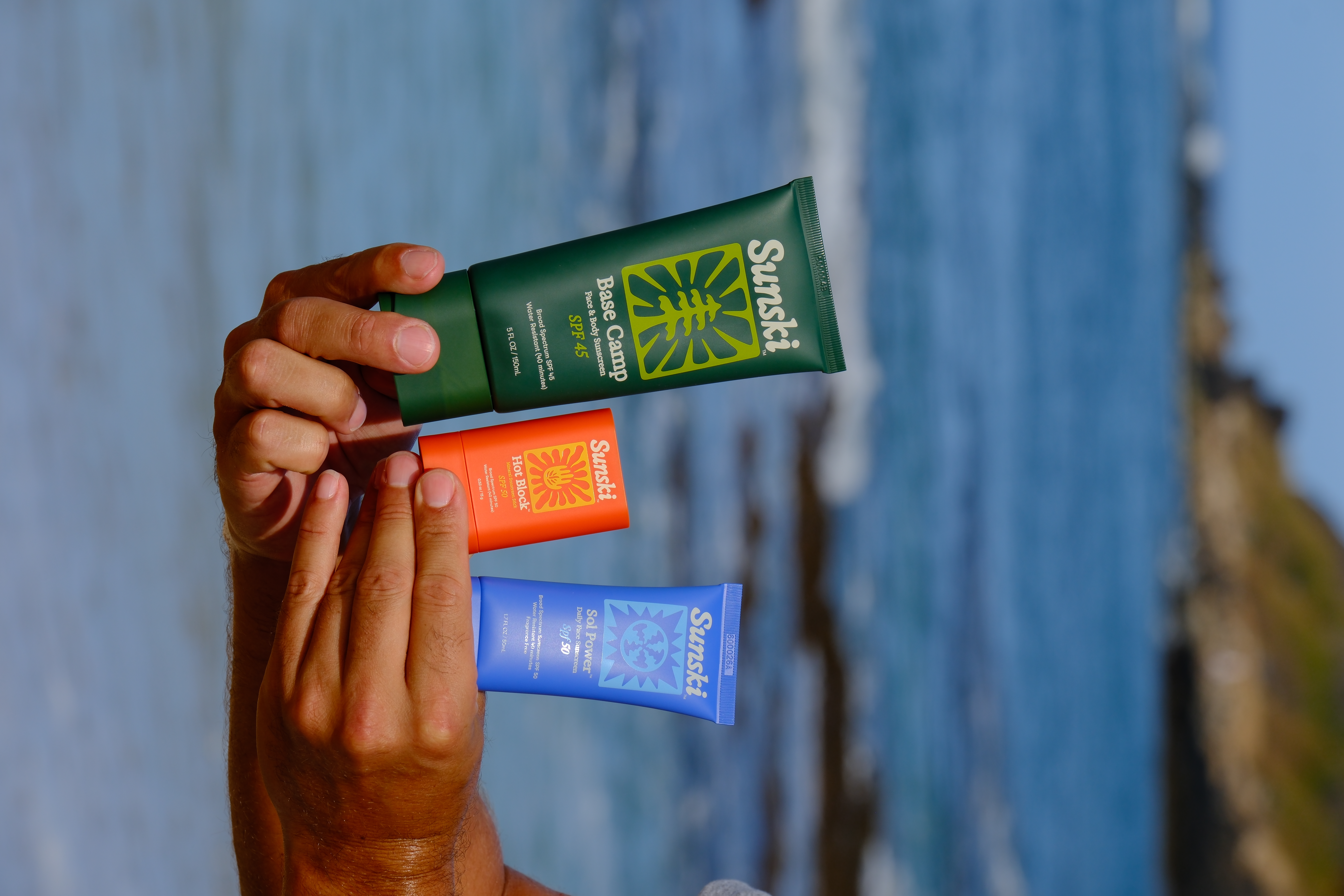
The Edit: This is our firsthand review of Sunski’s Daily Nature Kit, tested by a full-time traveling family of four on the west side of Oahu. I have worn sunscreen nearly every day since 2011, starting with long desert rides in Arizona, then flight training cockpits, years of ocean sailing, and now hiking here in Oahu. Sunski was founded in San Francisco in 2012 by Tom Stewart and Michael Charley, and launched its first SPF line in June 2026 after three years of development: Sol Power SPF 50 daily face, the Hot Block SPF 50 mineral stick, and Base Camp SPF 45 face and body, which arrived in July 2026. Sunski developed these formulas with Korean beauty labs, which makes this one of the few American outdoor brands bringing K-beauty texture to sun protection, and the 40-minute water resistance rating across the whole line is the one spec we would change. Written for families who live outside full time and need sun protection that survives a carry-on, a boat, and a day with no shade.
Sunski gifted these products through ShopMy. Our opinions are our own.
Sunski at a Glance
| Detail | What We Found |
|---|---|
| Discount code | None available yet. We’ll update this post when there is one |
| Brand | Sunski, San Francisco, California |
| Founders | Tom Stewart and Michael Charley |
| Founded | 2012, launched by Kickstarter |
| Owned by | Founder-led since 2012 |
| Formulated with | Korean beauty labs, K-beauty textures |
| What we tried | Base Camp SPF 45, Sol Power SPF 50, Hot Block SPF 50 stick, Estero sunglasses in Horizon Slate |
| Standout sunscreen | Sol Power SPF 50 daily face sunscreen |
| Biggest surprise | Hot Block, the smoothest stick I have used |
| Sunscreen types | Base Camp and Sol Power are chemical, Hot Block is mineral |
| Water resistance | 40 minutes on all three |
| Hawaii legal | Hot Block everywhere. Base Camp and Sol Power fine on Oahu and Kauai, not on Maui County or the Big Island |
| Sizes | Sol Power 1.7 oz carry-on, Hot Block 0.53 oz pocket, Base Camp 5 oz checked bag |
| What we’d change | The 40-minute rating, the plastic sunglasses lenses, no lens leash holes |
| Sustainability | Climate Neutral certified, 1% for the Planet member since 2012 |
| Sunglasses lens | Polarized CR-39, 100% UVA/UVB/UV400 |
| Sunglasses warranty | Lifetime warranty on every frame |
| Where to buy | Sunscreen is sunski.com only. Sunglasses also at REI, Anthropologie, Backcountry |
| Military discount | None we could find as of August 2026 |
| Best for | Full-time travelers, boat life, anyone outside all day |
| Discount code | None yet, check back for updates |

Sunski Review: The Honest Version
A sunglasses company sent us sunscreen, and I was skeptical.
That is not a knock on Sunski. Plenty of brands stretch into a new category because the margins look good, not because they have anything to add. So when the box landed through ShopMy, I expected three tubes I would use twice and forget about.
I have been putting on sunscreen almost every day since 2011. It started with long rides in the Arizona desert. The sun does not let up out there, and you are in it for hours with nothing between you and it. Then came flight training. That sounds like an indoor job until you have spent a summer in a cockpit with sun pouring through the canopy. After that we bought a boat and spent years on the water, where it hits you twice, once from above and once off the surface. Now we are on the west side of Oahu, hiking a route to the beach that has no shade on it at all.
So sunscreen is not a summer purchase in this house. It is standing gear, it gets used daily, and it lives in a bag that also has to clear a carry-on limit.
That is the lens we tested this through. Not whether it is nice, but whether it earns space we do not have, and whether we would buy it again once these tubes run out.
Sunski Sol Power SPF 50: The Korean Skincare Sunscreen in an Outdoor Brand’s Box
This is the one I keep reaching for, and the reason is on the side of the carton.
Sunski says they partnered with leading Korean beauty labs to build these formulas, and that they were after textures outdoor people would actually want to wear. That line caught my attention. K-beauty sunscreen has quietly taken over a lot of bathroom shelves in the last few years, and almost none of it is built for a day outside.
It is built for a commute. From what I have seen, this is one of the first American outdoor brands to go get that formulation expertise. Most just reformulate the same heavy sport lotion everyone else sells.
Read the ingredient list and the partnership is not just marketing. Centella asiatica, rice bran extract, houttuynia cordata, and tremella mushroom are all in there. Those are K-beauty staples, not filler someone dropped in for the label.

How It Actually Goes On
Featherlight, and it soaks straight in.
No white cast at all, which matters to me more than it might sound. I have worn plenty of sunscreen that sits on your face like a mask. After a couple of hours you feel it more than you feel the sun. This is not that. It goes on thin, disappears, and then you stop thinking about it, which is the whole job.
It is also not oil based, and that is the detail I would flag for anyone who runs warm. Heavy oil-based face sunscreen and a humid morning are a bad combination. This one does not sit greasy on the skin.
The front of the carton says fragrance free, and it is. That is worth knowing, because Base Camp is not, and I will get to that.
Where It Fits in the Bag
At 1.7 ounces, Sol Power is carry-on legal, and that decides more than people expect when you are moving constantly.
We are not near a Target most of the time. When something works it has to stay with us, not get rebought in whatever pharmacy is nearest the airport. Clearing the liquid limit means it comes on the plane and to the beach without us thinking about it. Check the current TSA allowance before you fly, because those rules move.
The Honest Caveat
I have used it twice.
Twice is enough to tell you how it feels going on and whether it disappears. It is not enough to tell you how it holds up over a season, whether it breaks anyone out, or how it performs on a genuinely brutal day. We will update this section once it has real time on it.

Sunski Base Camp SPF 45: The New One, and the Big Bottle
Base Camp is the newest thing Sunski makes, and it is newer than the rest of the line. Sunski announced the SPF System in June 2026 with Sol Power and Hot Block, and Base Camp arrived a month later in July 2026. It is the only one of the three built for face and body both.
At five ounces it is also the biggest bottle in the kit, which puts it in the checked bag. That is not a complaint, it is just the reality of a liquid that size. It is the one that stays with the luggage while the other two ride in the day bag.
The Walk Test
I took it out for about an hour, Makaha Valley to the beach and back, on a route with no shade anywhere on it. Anyone who knows Oahu knows the west side is the dry side, and Makaha gets sun the way the windward side gets rain. Sunscreen has a permanent spot in what we pack in a day hike backpack for exactly that reason.
It went on with no white cast and soaked in fast. Slightly greasy, and I want to be precise about that, because greasy covers a lot of ground. I have used mineral sticks that go on like frosting and sit there. Raw Elements comes to mind. This is nowhere near that. It is a light slick that fades in, and I did not think about it again once I was walking.
An hour in, both arms were sweaty and I could still feel product under the sweat when I rubbed my forearm. Not dripping, not running into my eyes, and my skin felt like it was breathing normally rather than sealed up.
Honest limits on that test. It was overcast the whole way, breezy, and not hot. So it tells you how this wears on a normal day outside rather than a brutal one.
The Squirt Nozzle Is Better Than You Would Expect
Small thing, and I noticed it immediately.
The spout is offset on the tube rather than centered, and it puts out a clean line without you having to squeeze hard or aim. That sounds trivial until you are applying it one-handed on a moving boat, or on a kid who is not standing still. Most tubes fight you a little. This one does not.
There is also no separate cap to lose. It is a lever that flips open and stays attached to the tube. That sounds like nothing until you have watched a screw cap go over the side of a boat. Or bounce off a rock and vanish down a slope while you stand there with an open tube and one free hand. It is a small design decision and it is the right one.
The Fragrance, and What Is Actually In It
Base Camp has a scent, and this is where I have mixed feelings.
I do not like sunscreen smell. That chemical coconut thing most brands lean on is genuinely unpleasant to me. Why put that much work into a formula and then finish it with a smell people have to tolerate? Base Camp does not smell like that. It is citrusy and light.
When I first noticed it I guessed it was something like linalool in there. Then I read the carton. The ingredient list says Fragrance, with limonene and linalool named. Limonene is the citrus note, and that is exactly what I was smelling.
So the scent is better than the standard, but it is still added fragrance. If you are sensitive to that, this is the one to skip. Sol Power is fragrance free and says so on the front, and that is the version of this formula for anyone who does not want scent at all.
Check the Date Before You Buy the Big One
Here is something we noticed that I have not seen anyone else mention.
Our Base Camp carton is stamped with a January 2027 expiration. Base Camp went on sale in July 2026, so that is roughly six months on the largest bottle in the kit. Sol Power and Hot Block came in the same box and are both dated into 2028.
We do not know why, and we are not going to pretend we do. It may be normal for this formula, it may be specific to the batch that came to us. We have not asked, and until we do, a guess is just a guess.
What we can tell you is how the dates work generally. Sunscreen sold in the US has to hold its stated SPF for a set period. That is why plenty of bottles carry no expiration at all. When a brand does print one, that printed date is the one that counts. Every carton in this kit also carries a twelve month symbol, meaning twelve months of use once you break the seal.
So the practical version is simple. Flip the box over and read the date before you commit to the five ounce bottle. That goes double if you are somewhere you cannot casually restock. On the biggest bottle, a short window is the one that actually costs you something.
None of which is stopping us. It is going on almost every day, on hikes, beach days, and errands around Oahu, and we will update this post once it has real time behind it.
Sunski Hot Block SPF 50: The Smoothest Stick I Have Used
I set the bar for this one before I opened it, and then it cleared the bar.
Hot Block is the only mineral product in the kit. Zinc oxide at 17.53 percent, no chemical filters, a half-ounce stick that disappears into a pocket. It is also the only carton in the set with the line about asking a doctor for children under six months, which tells you who Sunski expects to reach for it. It is also the only product in this kit that is legal to use on every Hawaiian island, which I get into below.
Why Sticks Earn a Spot at All
Sticks became my thing on the boat, and it was never about preference. It was about my hands being full.
On the water you are on the radio, or you are changing sails, or you are watching the chart and the depth at the same time. And if you are lucky, you are fishing, which is the one that really matters. None of that pauses while you find a tube, squeeze it out, and rub it in. Then you need something to wipe your hands on before you touch a reel or a line. A stick you can pull out one-handed, run across your face, and put back without breaking whatever you are in the middle of.
Bare Republic is the one that stuck. We have their SPF 50 and their SPF 70, and the 70 comes in a teardrop-shaped applicator. It slides on smooth and lives in a pocket without any thought. Raw Elements is the other end. Their stick went on cakey enough that I stopped reaching for it. Good product on paper, and I did not enjoy wearing it, which in practice means it did not get worn.
The Head to Head
I did this properly. Same arm, same session, Hot Block on one section and my Bare Republic teardrop stick right next to it.
Hot Block is the smoothest stick I have ever used. It does not pull the skin. The Bare Republic pulled, on the same arm, minutes apart, and Bare Republic was already the one I liked. That is the whole test and Hot Block won it.
There is an odd shiny consistency when you first open it, which I assume is just the formula. It goes away.
Both of them show a white cast on application and both disappear once you rub them in, which is what zinc does. If you swipe it on and walk away, you will look like you swiped it on and walked away. Rub it in and it goes.
On skin, Hot Block feels less greasy than the other sticks I have used.
The Thing I Would Add, and Why I Am Not Sure I Want It
A tinted version is the obvious next move, and I have mixed feelings about it.
The argument for it is simple. Some people do not want to look like they are wearing sunscreen, and a tint matches your skin tone so you do not. That is why Supergoop tints their Mattescreen line.
The argument against it is my laundry. Tinted sunscreen stains clothes, and if you are wearing resort wear that is a real cost. Raw Elements tints theirs with a cocoa powder base and I have stayed away from it for exactly that reason.
So if Sunski does it, my ask is that they do both. A tinted version for people who want it, the untinted for people who do not, and a plain warning on the tinted one that it can mark your clothing. That warning is missing from most tinted sunscreen and people find out the hard way.
Coming Off
This is the half of the test nobody runs, and it is the reason I have quietly given up on sticks before.
Both Raw Elements and Bare Republic need scrubbing in the shower. I have had Amanda scrub a face stick off my back after a swim. Heavy zinc stays put, which is the entire point, and then it stays put afterward too.
Hot Block did not do that. I put it on in the morning, worked for a few hours, then layered Base Camp over the top for a walk in the afternoon. By the end of the day both had simply worn off on their own. No scrubbing, no residue sitting on my skin at bedtime, none of the film the other sticks leave behind.
That cuts both ways and I want to be straight about it. Wearing off on its own is exactly what you want at the end of the day and exactly what you do not want at hour three, which is the whole reason the label says reapply. It is a comfort win, not a protection win.
I have not taken it for a long ocean swim, so I cannot speak to salt water specifically. What I can tell you is that it survived a full day of heavy sweating and then came off on its own, which is more than the other sticks in my rotation manage.
More on this: We keep a running list of every sunscreen that has survived life on the road with us in our guide to the best sunscreen for travel. Sunski is the newest addition.

Which Sunski Sunscreen Can You Actually Use in Hawaii?
This is the part I would want to know before ordering, and it is the one place where buying the wrong product in this lineup can leave you unable to use it.
Hawaii has two layers of sunscreen law and most people only know about the first one.
Statewide, Act 104 has banned the sale of sunscreens containing oxybenzone or octinoxate since January 1, 2021. None of the three Sunski formulas contain either, so all three clear that bar. Sunski says as much on their product pages.
The second layer is where it gets specific. Two counties passed mineral-only rules that go further than the state law, and in both of them the only permitted active ingredients are zinc oxide and titanium dioxide.
Maui County, which covers Maui, Lanai, and Molokai, passed Ordinance 5306, effective October 1, 2022. It is the stricter of the two, because it covers using the sunscreen and not only selling it. Bringing your own from home does not get you around it.
Hawaii County on the Big Island followed with Bill 167, effective December 1, 2022. As written it covers providing, selling, and distributing, so it is aimed at what shops can stock rather than what is in your bag. Even so, if the whole island is selling mineral only, mineral is what you should be wearing there.
Oahu and Kauai have no county ordinance of their own, so state law is what applies on both.
That splits this kit in half.
Hot Block is zinc oxide only, so it is the one product here you can legally use anywhere in the state. Base Camp and Sol Power are chemical sunscreens using homosalate, octisalate, and avobenzone, with octocrylene in Sol Power. Those are fine where we are on Oahu, and they are not permitted on Maui, Lanai, Molokai, or the Big Island.
We are on the west side of Oahu, which is Honolulu County, so all three are legal for us. If you are island hopping, pack accordingly.
Why We Trust Sunski on This More Than Most Brands
Sunski does not use the phrase reef safe, and they explain why on their own product pages. Their position is that reef safe is not a regulated term and can be misleading. Maui County says the same thing in their public guidance.
That is a brand choosing accuracy over the easier marketing word, and it is unusual. Most companies slap reef friendly on the bottle and let you assume it means something legally.
They also actively steer you away from their own chemical sunscreens if you are headed to those islands. On both the Base Camp and Sol Power pages, Sunski tells you to buy Hot Block instead if you are traveling to the Big Island, Maui, Lanai, or Molokai. Recommending the cheaper stick over the more expensive bottle is not the move of a company optimizing for the sale.
None of this replaces reading the label yourself. These are county laws, they differ from the state law, and they change. Check before you travel and read the active ingredients on the box rather than trusting a phrase on the front. We keep a fuller breakdown in our guide to what sunscreen to pack for Hawaii.
Where I Think the Rules Miss
Here is my opinion, not legal advice.
Regulators write for the worst case, because that is what regulation does. But a rule cannot know how you actually use the product. Sunscreen you put on for a Costco run and shower off that afternoon more than likely never touches a reef. The rule treats that the same as swimming over live coral.
So think about how you actually live. Pool days, hikes, errands. If you are not getting in the ocean, wear whatever you will actually put on consistently, because the sunscreen you skip protects nobody.
The moment it matters is the moment you get in the water. Then wear the zinc. It costs you nothing but a thicker application.
Two caveats. The Maui ordinance covers using the sunscreen and not only selling it, so mineral is the answer there regardless of how you spend your day. And what goes down your shower drain ends up in the same ocean.
Living out here made me care more about this, not less. We swim with turtles at our own beach. That is not an abstraction, it is our afternoon.
The Forty Minutes Question
This is the one thing across the whole line that gives me pause, and it applies to all three sunscreens equally.
Every product in the Daily Nature Kit is rated water resistant for forty minutes. Base Camp, Sol Power, Hot Block, all the same. The label tells you to reapply after forty minutes of swimming or sweating, immediately after towel drying, and at least every two hours regardless.
Here is why that matters more for us than it might for you. We are in and out of the ocean constantly. Not a swim and then a towel and a chair, but in, out, back in, all afternoon. Forty minutes is roughly one snorkel before the clock has run out. On a boat day it is nothing.
I found the edge of it on my own walk, and I was not even swimming. About an hour of walking with no shade, overcast and breezy, and by the end both arms were sweaty. I could still feel product on my skin under the sweat, which is more than I expected past the rated window. But I had crossed the line at forty minutes and I knew it. I carry a sweat rag. I was not carrying sunscreen.
That is on me, not on Sunski. Forty minutes is a real number that they tested and printed honestly, and plenty of sunscreens carry the same rating. It is not a defect.
It is still the spec I would change first. If Sunski asked me what would make this line better for people who live on the water, that is the answer, and it is ahead of anything else on my list.
So Why Are We Still Using It
Because the rest of it is good enough that we work around the number instead of walking away from it. Hot Block is the answer to the gap. It is the one I will actually carry, so it is the one that actually gets reapplied.
The honest version is that no sunscreen survives a full ocean day without reapplication, whatever the label says. Eighty minutes just means you get caught out less often. Forty means you have to carry the tube. If you apply once in the morning and forget about it, this line will let you down faster than one rated longer.
I should be clear about the limits here. My testing has been sweat, not swimming, and I sweat heavily enough that it is a real test in its own right. What I cannot tell you is how these hold up across a long snorkel or a full day in and out of salt water. Take the forty minutes on the label at face value for that.
Sunski Estero Sunglasses: A Squared-Off Aviator With One Real Compromise
The pair Sunski sent is the Estero in Horizon Slate, and my honest take is that they are nicer than I expected and not what I would grab on my way out the door.
Both of those things can be true. I am a hard sell on sunglasses. I carry three pairs everywhere we go because I want different optics for different light, so the bar here is not whether they are good. It is whether they displace something.

What They Get Right
The frames are light, and that is not a small thing when they are on your face for twelve hours. The clarity is genuinely good and the polarization does what it should. Out here we get rainbows you can barely pick out with your naked eye, and a good polarized lens makes them jump. These do that.
The aviation styling is not accidental, and it is more literal than I expected. Sunski says the filigree engraved around the lens perimeter is a Concorde silhouette, and I assumed that was marketing stretching a bit. It is not. Get close and there is a small Concorde on the frame, wings and all. The temples are shaped after wings too.
I noticed the shape of the frame read as aviation before I knew any of that, which is probably the point. Good design cues land before you can name them.
What I did not expect is that the pattern is useful. That texture around the rim gives you something to grab. Pushing them up onto your head, pulling them back down, taking them off with wet hands, you get grip instead of sliding fingers. Most metal frames are smooth there, so you end up pinching the lens itself. That is how lenses get smudged and scratched.
The Plastic Lenses
Plastic lenses are my one real hesitation, and it comes from how I use sunglasses rather than anything wrong with this pair.
To be fair to Sunski, these are CR-39, which is the good plastic. Better optical clarity than the polycarbonate most brands use at this price, and more scratch resistant than poly. They block 100 percent of UVA, UVB, and UV400, and they pass the FDA basic impact test. This is not a cheap lens.
It is still not glass. Plastic scratches. Once a lens is scratched you stop wanting to wear it, so a pair quietly retires long before the frame does. Coatings are the other half. On plastic they sit on the surface and eventually wear off. My Maui Jims and Costas are glass and that is why they have lasted.
There is also a reflection in the corner of the frame that catches my eye. Plenty of people will never notice it. I do, and I mention it because small things get louder by hour ten.
If Sunski ever puts out a glass lens, I would genuinely like to try it. The rest of what they are doing is good enough that the lens is the only thing holding me back.
They Are Not a Wraparound
The Estero runs a base 4 curve, where a true wraparound is a base 6 or 8, so this is a measurable difference rather than a matter of taste.
For me that is a coverage question. Out here the light does not only come at you from the front, it comes off the water and around the sides, and a wraparound closes that off. These do not.
That is a design choice, not a flaw. A wraparound looks like gear, and the Estero looks like something you would wear to dinner. If you want one pair that works for a beach day and then goes into town with you, that trade is working in your favor. Mine just happens to run the other direction.
The One Feature I Wish They Had
Drill a hole in each temple tip.
That is it. A small hole at the end of each arm lets you run fishing line or a bit of cord. Make your own leash, any length you want. A few higher-end manufacturers do this. On a boat you need retention. Climbing or hiking, you push them up and pull them down constantly. Letting them hang on your chest is worth more than it sounds. Show up at the beach without your case and you can hang them off something instead of setting them down in the sand.
I would use it on every pair I own. It is not a fashion feature, which is probably why it is not there.
The Pilot Note Most Reviews Will Not Give You
If you fly, polarized lenses come with a caveat that has nothing to do with Sunski.
Polarized lenses can wash out or black out certain cockpit displays. It depends on how the lens orientation lines up with the screen. Tilt your head and things come back. On round-gauge panels it is a non-issue, but with glass panels it is something pilots have run into for years.
I have not worn these in a cockpit, and I have not flown in a while. My understanding is that newer displays have largely engineered around this, but I have not verified that against these lenses and a modern panel. Take it as a known thing to be aware of with any polarized pair, not a strike against this one.
Where They Land Against My Maui Jims and Costas
Some days, yes, and here is exactly where.
My Costas have a dark blue lens and come out on a full brightness Hawaii day, because the sun here comes down close to straight overhead. A second pair of Maui Jims with a blue lens goes on for overcast and drizzle, when I still want polarization to read the water but need more light through. My gray Maui Jims are the everyday middle.
The Estero lands in that middle slot next to the gray Maui Jims. That is a real place in the rotation, not a consolation. The clarity holds up against glasses that cost considerably more.
Where it loses to both is lens material and curve. Mine are glass and both sit closer to a wraparound. Where it beats both is the warranty, and that is worth its own paragraph below.
These have earned a place in the rotation, and I am curious what else they are building. If you want the other end of the eyewear spectrum, we also reviewed Meta smart glasses for travel.

How Sunski Compares to the Gear We Already Own
We did not come to this with fresh eyes. There is a shelf of sunscreen in this house and three pairs of sunglasses in the bag on any given day, so the only useful question is how Sunski stacks up against what it would have to replace.
Sol Power Against Supergoop
The closest thing we have used recently is Supergoop Mineral Mattescreen SPF 40, untinted, which I tried on my hand and arm at Ulta.
It disappeared completely, which impressed me. Mineral formulas usually leave a cast, and Supergoop leans on a neutral tint to hide it in their other shades. The untinted version vanishing on skin is a real result. It also had no sunscreen smell at all, which I care about more than most people.
Sol Power is the fairer comparison to that than Base Camp, since both are daily face products in about the same size. Sol Power wins on being built for time outdoors rather than a city commute. It also wins on the K-beauty formulation, which shows up in the ingredient list rather than just the marketing. Mattescreen wins on finish. It is oil free and matte, and Base Camp in particular runs a little slicker than that.
One thing I assumed and got wrong, so I will correct it here. I thought Mattescreen carried the same forty minute water resistance. Reading the label more carefully, it directs you to use a water resistant sunscreen if you are swimming or sweating. That is not the same claim at all. Sunski makes a water resistance claim and prints it on the front. That is a point in Sunski’s favor that I nearly gave away.
The Warranty, and Why It Matters More Than the Spec Sheet
I am on my third pair of Costas. The warranty on the current pair ran out, I broke one side, fixed it myself, broke the other side later, fixed that too. I have thought about sending them in and never have, because dealing with the process is its own project.
Sunski puts a lifetime warranty on every frame they make and asks for the story of how you broke them. That is a meaningfully different posture, and given where this company came from, it tracks. Sunski exists because Tom Stewart brought a few pairs of secondhand 1980s Australian sunglasses home from a surf trip and could not let them disappear. A company founded on refusing to let a good pair of glasses die thinks differently about what happens after you buy them.
Is There a Sunski Promo Code?
Straight answer: not right now, and I would rather tell you that than send you hunting.
Sunski has not issued us a creator code, and their affiliate program does not allow partners to promote codes the brand did not issue. So if you find a Sunski discount code on a coupon aggregator site, we cannot vouch for it, and in our experience those usually fail at checkout anyway.
If Sunski offers a code down the road it goes right here with the date we verified it, and on our discount codes page the same day. Anything we get, you get.
Where to Buy Sunski
If you want the sunscreen, sunski.com is your only option right now.
We checked. REI, Anthropologie, and Backcountry all carry Sunski sunglasses, and none of the three carry the SPF line. That surprised me given how new the sunscreen is and how much shelf space those retailers give sun care. It may change as the line rolls out, but as of now the only place to buy Base Camp, Sol Power, or Hot Block is the brand direct.
Sunglasses are the opposite. You have options, and buying in person is worth it with sunglasses anyway since fit is personal and no product photo tells you how a frame sits on your face.
What We Would Actually Restock
This is the part that matters more than where, because sunscreen is not a one-time purchase. Sunglasses you buy once and keep for years. Sunscreen runs out, and how fast it runs out decides whether a brand is a real part of your routine or a thing you tried once.
Sol Power is the one we will rebuy. It is a face product, it goes on daily, and at 1.7 ounces it is carry-on legal, which means it comes with us rather than getting left behind or repurchased in whatever pharmacy is nearest the airport. That is the whole reason it will last in our rotation.
Hot Block is the pocket one and it will get used hard now that it has proven itself. A half ounce does not last forever when you are reapplying on your face all day, and it is the one that goes in the bag on beach days.
Base Camp is the checked bag bottle. Five ounces is a lot of sunscreen and it covers a whole body, so it is the slowest to run out and the one where the expiration date on the carton is worth a look before you buy.
A Note on Buying From Anywhere Else
If you find Sunski on a marketplace listing at a suspiciously good price, be careful. Sunscreen is a product where storage matters, since heat degrades it, and a lifetime warranty on sunglasses is generally worth more when you have a receipt from an authorized seller.
Sunski Review FAQ
Not one we can give you right now. Sunski has not issued us a creator code, and their affiliate terms do not allow partners to promote codes the brand did not issue. If that changes it goes straight into this post with the date it was verified.
No public Sunski discount code exists as of August 2026, and none we can pass along. Codes on coupon aggregator sites are not ones we can vouch for and they usually fail at checkout. Their email list is the best route to hear about a sale first.
As far as we know, no. We could not find a military discount program listed anywhere on their site as of August 2026. It is worth asking at checkout or emailing them directly, since some brands run one without advertising it. If we learn otherwise we will update this.
Depends which island and which product. Statewide, Hawaii bans the sale of sunscreens with oxybenzone and octinoxate under Act 104. None of the three Sunski formulas contain either, so all three clear that. But Maui County, which covers Maui, Lanai, and Molokai, and Hawaii County on the Big Island both go further and allow only mineral sunscreen. Zinc oxide or titanium dioxide, nothing else. Maui’s ordinance is the strictest, because it covers using the sunscreen and not only selling it, so bringing your own from home does not get you around it. That means Hot Block is the one to take to those islands. Base Camp and Sol Power are fine on Oahu where we are, and on Kauai, since neither has a county ordinance. Check current rules before you travel, because these are county laws and they change.
Sunski themselves say reef safe is not a regulated term and can be misleading, and I agree with them. Maui County says the same thing in their own guidance. What I can tell you is what is in the bottles. Base Camp and Sol Power are chemical sunscreens using homosalate, octisalate, and avobenzone, with octocrylene in Sol Power. Hot Block is 100 percent mineral, zinc oxide at 17.53 percent. Read the actives on the box rather than trusting a phrase on the front.
Yes, forty minutes on all three products. That is the rating printed on every carton in the kit. The label tells you to reapply after forty minutes of swimming or sweating, immediately after towel drying, and at least every two hours regardless. Forty minutes is the shorter of the two ratings sunscreens carry, and it is the one thing about this line I would change.
Sol Power and Base Camp do not, in my experience. Sol Power in particular disappears completely. Hot Block shows white when you first swipe it on, because that is what zinc does, and it goes away once you rub it in.
Base Camp has a light citrus scent from added fragrance, and the ingredient list names limonene and linalool. It does not have the coconut chemical smell most sunscreens have. Sol Power is fragrance free and says so on the front of the box. If you are sensitive to fragrance, Sol Power is the one.
Yes. The Estero uses polarized CR-39 lenses that block 100 percent of UVA, UVB, and UV400, and they pass the FDA basic impact test. If you fly, be aware that polarized lenses generally can wash out some cockpit displays depending on the angle. I have not tested this pair against a modern glass panel, so treat that as a known consideration with any polarized lens rather than a mark against these.
Plastic. CR-39, which is the good optical plastic rather than the cheap polycarbonate you find at this price, but still plastic. I prefer glass because it holds coatings better and resists scratching over years of daily wear. If Sunski ever releases a glass lens I will be first in line.
Yes, on every frame they make. That is a real point in their favor. I am on my third pair of a competitor’s sunglasses and have repaired the current ones myself twice rather than deal with a warranty process, so a brand that makes it straightforward matters more than it sounds.
It is Sunski’s name for the SPF line paired with sunglasses. Sunski announced the SPF System in June 2026 with Sol Power and Hot Block, and Base Camp followed in July 2026. Ours came with all three plus the Estero sunglasses.
Tom Stewart and Michael Charley, who founded the company in San Francisco in 2012 and still run it. It started as a Kickstarter to bring back a pair of secondhand 1980s Australian sunglasses.
Sunski Review Verdict: Would We Buy It Again?
Yes, and the sunscreen is the reason.
We came to this as a family that lives outside full time. We are on the west side of Oahu, on a route to the beach with no shade on it. The problem we needed solved was sun protection that survives a carry-on, a boat, and a day where you are outside from morning until dark. Sunski solved most of it.
Sol Power is the one I will keep rebuying. It is featherlight, it disappears, and it is fragrance free. The Korean beauty lab formulation is not marketing language either, it is in the ingredient list. Hot Block turned out to be the smoothest stick I have used. It beat the stick I was already loyal to, head to head on the same arm. Base Camp is the big bottle for a full-body morning, and the one where I would read the expiration date on the carton before I bought it.
The Estero I like more than I expected and less than my glass-lensed pairs. It has a real place in the rotation, and I am curious what Sunski builds next. If they ever put out a glass lens, I would like to try that pair. Same if they drill a small hole in the temple tips so you can run your own leash.
The forty minute water resistance is still the thing I would change first. My testing has been sweat rather than swimming, and I sweat heavily, so I trust what I have seen on land. Ocean days are a different question and the label number is what I would go by there.
No Sunski code exists right now, and if one ever does it will be in this post and on our discount codes page the same day.
Packing for a trip and working out what sun protection earns space in the bag? We put everything we have tested in one place in our guide to the best sunscreen for travel.


Curated by us, for you. We may earn a commission on pieces you shop through our links


The Vanity Case
Shop the edit
Just Landed
Shop the edit
Finishing Touches
Shop the edit
Leave a Reply


style
Farm Rio Souvenir Scarves Dress Review: Midsize Sizing, Fit & Vacation Styling testing
style
Vacation Look No. 3 | Farm Rio Golden Nature Maxi Dress Outfit


Have a brand story to tell? We'd love to hear what you have in mind.
And everywhere in between
Bora Bora to Baja


Hey Salty Vagabond crew!! Thank you so much for the honest review – we put our heart and soul into our SPF product, and so I am glad to see it is a hit!
Very astute callout on the short expiration date for the Base Camp SPF 45 lotion, and I have the exact answer: we developed this formula from scratch, and the lead time on SPF formula development is *incredibly long*. Expiration dates are proven by accelerated wear tests, which take months and months to conduct. For these early press samples, we had just enough test results completed to stand behind a very short expiration date. For our next batch, we have been able to fully complete the wear testing and they will have the normal 2+ year expiration dates that you would expect.