





saltyvagabonds
Saltyvagabonds
Destinations

Asia
Bali
Japan
Korea
Malaysia
singapore
Thailand
Vietnam
Europe
Germany
France
U.K.
North America
Canada
Mexico
Oceania
Polynesia
Micronesia
Hawaii
Guam
Indonesia
All Travel Blogs
Travel Tips
Planning
About us
usa
Destinations
Travel Tips
Planning
About us
All Categories
Travel Tips
Worldschooling
Digital Nomad
Travel Hacking
Travel with kids
Lifestyle
Military Travel
Packing
All Travel Tips
Tech

Travel Hacking with
Chase Points
Military Space A Flights
Guide








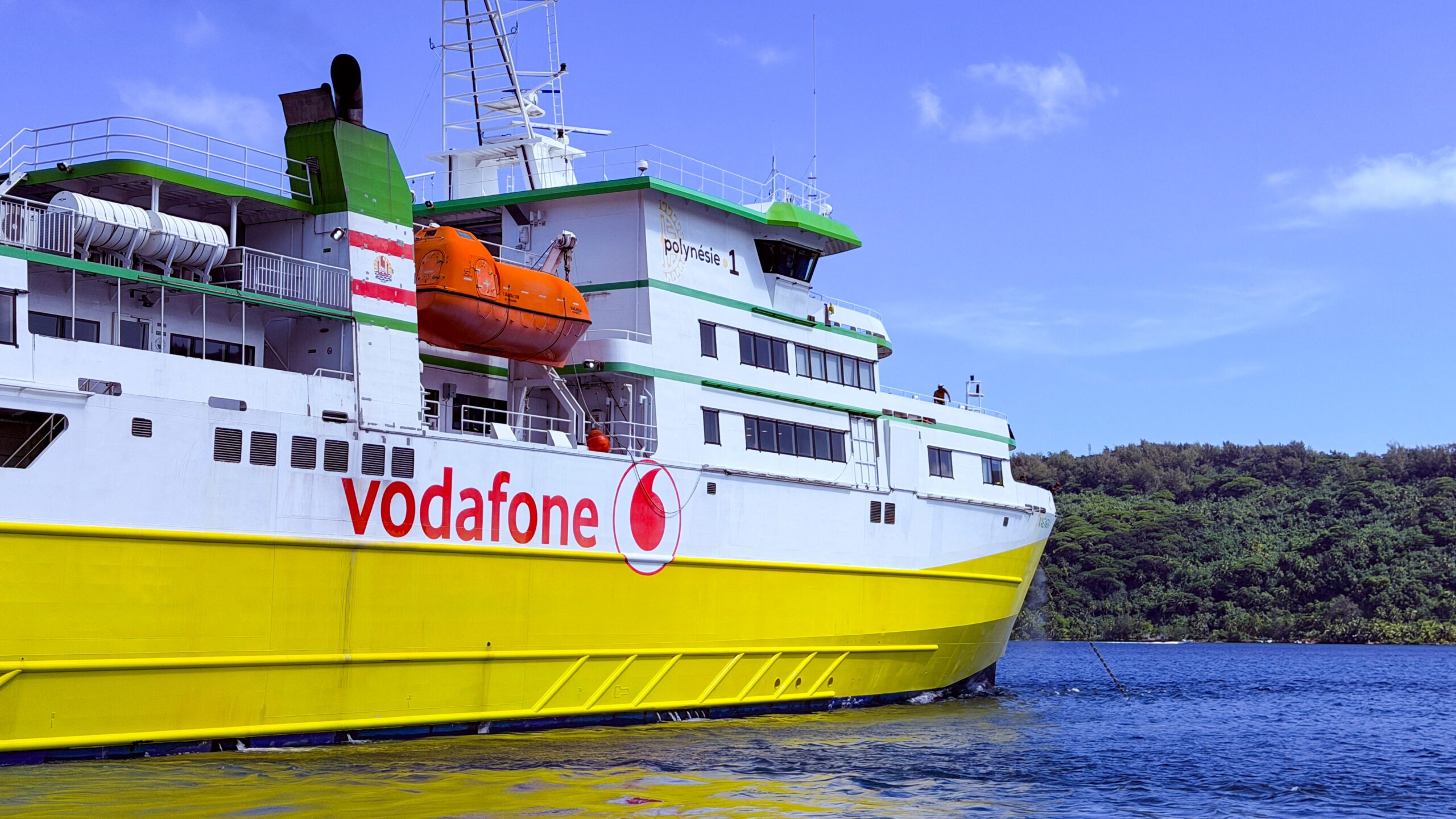

Vaeara’i Ferry to Bora Bora: What to Expect With an Overnight Ride
We took the Vaeara’i ferry from Tahiti to Bora Bora and learned a lot along the way. Here’s our honest experience with booking, luggage, seating, food, and what to know before you arrive.

If you click on links we provide, we may receive compensation.


This article shares our experience taking the Vaeara’i ferry from Tahiti to Bora Bora on the overnight inter-island route through Huahine, Raiatea, and Taha’a. The crossing takes about 12–14 hours and operates as a passenger and cargo ferry connecting the Society Islands. We cover booking, check-in, luggage handling, seating, food onboard, and what to expect when arriving at the cargo pier outside Vaitape.

Quick Facts: Vaearai Ferry to Bora Bora
| Category | Details |
| Ferry Company | Vaeara’i Ferry |
| Route | Tahiti (Papeete) to Bora Bora (Vaitape) |
| Travel Time | About 12 to 14 hours |
| Departure Style | Overnight ferry |
| Check-In | We were told to return by 7:30 PM for an 8:00 PM departure |
| Checked Bag Allowance | 1 checked bag per person up to 23 kg |
| Extra Bag Fee | About $7 USD per extra checked bag |
| Carry-Ons | Not weighed on our trip |
| Seating | Lounge chairs, cafeteria seating, reclining seats, benches, outdoor deck seating |
| Food | Full menu with hot food, snacks, drinks, and breakfast items |
| Arrival in Bora Bora | Cargo-style pier outside central Vaitape |
| Best For | Travelers who want a slower, scenic, lower-cost alternative to flying |
After a last minute Air New Zealand flight from Auckland, we noticed the Vaeara’i ferry still sitting in port in Papeete and were honestly thrown off because we thought it had already left. Between checking out of our hotel, trying to check into an Airbnb, and completely scrapping our Auckland plans, the whole 24-hour stretch felt like a whirlwind.
But somehow, we made the ferry happen last minute.
We chose it because it was cheaper than flying, because you can bring a car if you want, and because this is how a lot of locals actually move between the islands. You also get to see more of the country this way, and we are boat people anyway. Ferry travel is a vibe for us in almost every country, and French Polynesia ended up being one of my favorite ferry experiences to date.
The ride was long, around 12 to 14 hours, but surprisingly smooth. The swell was coming from the stern, so it never felt rough or dramatic. And yes, it is absolutely doable with kids.
Booking was easy, the luggage rules were more relaxed than flying, and the people at the ferry dock were really helpful. The one thing I would think through more next time is transportation once you arrive in Bora Bora.
If you’re considering taking the Vaeara’i ferry to Bora Bora, here’s what the experience was actually like and what I’d want to know ahead of time.

Why We Chose the Vaearai Ferry Instead of Flying
We took the Vaeara’i ferry because it was the more affordable option, but that was not the only reason.
There is something about moving between islands by boat that feels more connected to the place than just hopping on a short flight and landing somewhere new less than an hour later.
The ferry gave us a slower way to move through French Polynesia, and that mattered to us. It also gave us more flexibility with luggage, which was a big deal after a chaotic travel stretch, and it is one of the few options that can also take vehicles.
There is another ferry company that also runs between Tahiti and Bora Bora, but this post is specifically about the Vaeara’i ferry, which is the one we took.
If speed is your top priority, flying is obviously faster. But if you want a more flexible and more interesting travel day, the ferry has a lot going for it.

Booking the Vaearai Ferry Was Easy
Booking the ferry was pretty easy.
Since we were planning to travel as walk-on passengers without a car, we were not too worried about availability. Ferry travel does not feel as competitive as flights for foot passengers, and from our past experience in French Polynesia, seating availability tends to be more forgiving.
Booking in Person
We actually booked in person this time.
We were staying at the Boutique Hotel Kon Tiki Tahiti and thought the ferry was already gone because of the international date line chaos with New Zealand. But when we saw it still in port, we changed course.
After we were settled into the Kon Tiki Hotel, we went to the Papeete Market, grabbed food, and on the way back stopped to talk to the women at the ferry counter. She got us booked, printed our tickets, and told us to come back by 7:30 PM.
That was one of the parts that surprised me most. It felt so much easier and less stressful than I expected. Nobody acted rushed, nobody made it feel complicated, and even though we were doing this in the middle of a last-minute plan change, the whole thing felt manageable.


Booking Online
You can also book the Vaeara’i ferry online, and it works similarly to airline booking.
We have booked ferries online before in French Polynesia when taking a car to Moorea on a different route, and that process was easy too. If you are bringing a vehicle, booking ahead matters more because car space is more limited than walk-on passenger space.
If you book online, keep your confirmation number, your receipt, and a screenshot of the booking handy. Those details make check-in easier, especially if you are juggling luggage, kids, and travel-day chaos.
Ferry Check-In in Tahiti
Check-in was straightforward.
Whether you are arriving by taxi, bus, rental car, personal car, or just walking over like we did, once you get to the port you head toward the water and find the office for your ferry company.
Ferry Office Location
The Vaeara’i ferry office is located closer to the military pier on the north side of the building. That is where you handle check-in, ID, luggage questions, and any baggage fees.
You will want your booking confirmation ready, along with a government-issued ID or passport. This is also the moment to ask any last minute questions about luggage if you are unsure how the checked bag setup works.
Check-In Timing
We were told to come back by 7:30 PM for our 8:00 PM departure, and that timing worked fine for us.
If you are checking bags, I would still build in more time than you think you need. The process is not difficult, but it is different from an airport, and it helps to not feel rushed while you are trying to figure out where everything goes.
Waiting Area and Pre-Boarding
After checking in, you head upstairs to the waiting area in front of the ferry. Staff scan tickets and give you a wristband showing your destination.
Our wristbands were for Bora Bora, and once you enter that pre-boarding area, you cannot really leave again. There were bathrooms, but you will want to handle anything else beforehand because it is not the kind of setup where you can wander back out and grab something later.


Our Small Ticket Mix-Up
We did have one small issue where the original ticketing had the wrong stop on it. The guy handling boarding noticed it, radioed down, and basically told us not to worry. He gave us Bora Bora bracelets and fixed it quickly.
So yes, check your tickets, but also know they handled it really smoothly. What could have felt stressful ended up being a non-issue because the staff were calm and helpful about it.
Vaearai Ferry Luggage Rules
This was one of the parts I was most nervous about, and it ended up being much easier than I expected.
For the Vaeara’i ferry, each person gets one checked bag up to 23 kilograms. We asked specifically about our bags because we had just flown in on Air New Zealand and some of them were around 23.9 kilograms. The woman at the counter told us it would not be a problem.
Extra checked bags were supposed to be about $7 USD each, which honestly still felt pretty reasonable compared to airline baggage fees. In the end, they did not charge us for our extra two bags.
Carry-ons and backpacks were not weighed or charged on our trip. That matters because it meant the only bags they seemed concerned about were the ones being stored underneath, not the backpacks and smaller items we kept with us.
That whole system felt way less stressful than flying.

How Checked Bags Work on the Vaearai Ferry
Luggage works differently here than at an airport.
There is no airline style baggage tag, barcode, or scanning system. Instead, your checked bags go onto a large rolling cart that gets loaded onto the ferry.
I helped load some of our luggage onto the cart, and a crew member handled some too. One of our suitcases is cracked badly across the top handle, and we all kind of laughed about it because nobody wanted to grab that one first.
What to Know About the Cart System
This is basically how it works. Your checked bags are placed onto a luggage cart, the cart is loaded onto the ferry, and then at island stops it comes off so people can grab their items if they are getting off there. When you arrive at your destination, your bags are waiting on that same cart.
It feels a little chaotic the first time you see it, especially if you are used to airline systems, but it worked.
We do use Apple AirTags in our luggage, and at one point it looked like our bags were still at the previous stop, which had us stressed. But when we arrived in Bora Bora, the bags were right there waiting.
Pro Tip: The biggest thing I would tell someone else is to make your luggage easy to recognize. Since there is no tagging system, you do not want someone grabbing your plain black suitcase by mistake when the cart comes off at another island.
Seating on the Vaearai Ferry
The seating was more flexible than I expected.
There was a mix of seating styles, and once people got off at the first stop, things opened up a bit more and we were able to improve our setup. That ended up mattering more than I expected on such a long crossing.

Indoor Seating
Inside the ferry, there were cafeteria style tables, regular passenger seats, some seats with strong recline, some with barely any recline, and bench seating that felt kind of like sleeping on a couch.
The corner seats were definitely better than some of the middle ones. We got lucky and were able to switch into better reclining seats, which made the ride much more comfortable.
The indoor space felt practical rather than fancy. It was not trying to be a luxury environment, but it worked, and there were enough options that people could settle in however made the most sense for them.

Outdoor Deck Seating
Outside, there was plenty of space too.
On the Vaeara’i ferry, there was an outdoor seating area just off the indoor area with plastic couch-style seating and little coffee tables. The second deck had both covered and open air seating.
The chairs upstairs were grouped in sets of four, which made it easier for people to stretch out and sleep across them. A lot of people did exactly that.

How People Actually Slept
This was one of the most helpful things to see because it reset my expectations.
A lot of locals had clearly done this before and came prepared. People slept across chairs, on benches, on the floor, wrapped in blankets, and with little camp style setups that made it obvious this was not their first overnight ferry.
I ended up lying on the ground with a beach towel at one point and honestly got decent sleep that way.
That was one of the biggest lessons of the whole trip. The ferry itself is not hard. You just want to come prepared for the fact that people treat it more like a long overnight transport than a formal seated passenger experience.
What I’d Bring Next Time
If I were doing this again, I would have a blanket or beach towel, a small pillow or neck pillow, a hoodie, comfortable pants, ear plugs or noise canceling headphones, and some kind of sleep mask easy to grab instead of buried in checked luggage.
The ferry is doable without these, but they would make the overnight ride a lot nicer.

Food on Board the Vaearai Ferry
There was food onboard, and the menu was bigger than I expected.
The ferry had a full galley setup with a lot of menu options. The staff did not speak much English, but we still managed to order what we needed without too much trouble.


What We Ordered
We ordered a toasted ham and cheese panini, a cheeseburger and fries, and a Chinese-style fish with tomatoes and rice. They were celebrating Chinese New Year onboard, so there were decorations up too, which made the whole dining area feel a little more lively.
There were also drinks like beer, soda, tea, water, and wine available.
Was the Food Good?
The most honest answer is that it was average.
Not bad. Not amazing. Just fine.
It was absolutely good enough for a long ride. Alex thought the panini was above average. I thought it was ferry food in the best sense of the phrase. It did the job, and on a trip like this that is really all I needed from it.
The locals completely cleaned out the poisson cru at dinner, which honestly says something.
Breakfast on Arrival Morning
For the overnight ride, they also had breakfast-style items out in the morning, including donuts, croissants, coffee, and waffles.
If you have picky eaters or dietary restrictions, I would still bring snacks or backup options. The food onboard worked well for us, but I would not want to rely on it completely if I had a kid who only ate very specific things.


Stops Along the Way
This is not a direct route, and that is part of what makes it interesting.
The Vaeara’i ferry stops at multiple islands along the way, including Tahiti, Huahine, Raiatea, Taha’a, and Bora Bora.
Huahine was dark for us, but the dock was lit. By the time we approached Raiatea, the sky was getting lighter and the views started getting really good. We sat longer there while people, cargo, and vehicles were offloaded.


Why the Overnight Route Feels So Scenic
The overnight timing actually made the route feel really special. You leave Tahiti with city lights behind you, spend the night crossing open water, and then wake up as the islands begin appearing again in the morning light.
It is a very different experience than flying because you do not just arrive somewhere. You move through the islands one by one and actually feel the distance between them.
And even with all the stops, the ferry was basically on time. We were only about 10 minutes behind arriving into Bora Bora.


Arrival in Bora Bora on the Vaearai Ferry
Arrival into Bora Bora on the Vaeara’i ferry was one of the prettiest parts of the entire crossing.
By that point, we had already been moving through the islands overnight, so waking up and seeing Bora Bora come into view felt really special. If the weather is clear, you can start seeing the island and its mountain from a distance, and there is something about approaching Bora Bora slowly by boat that feels very different from flying in. You get to watch the island reveal itself instead of just landing and being there.
As the ferry got closer, the views kept getting better. The water, the mountain, the smaller motus, and the whole silhouette of the island just looked unreal. It was the kind of arrival that makes you stop what you are doing and actually pay attention.


Getting Off the Ferry
Once we docked, getting off the ferry itself was easy. Passengers moved toward the back of the vessel, went down the stairs, and exited via the ramp onto the dock. It was not confusing or chaotic. The crew guided people off, and the process felt pretty smooth even though this is clearly a working inter-island ferry and not some polished tourist transfer.
Our luggage cart was taken off not long after, and we grabbed our bags and moved into the shade while figuring out our next step. That part was a relief because my Apple AirTags had not been updating correctly, and at one point they had made it look like our bags were still sitting at the previous stop. So seeing everything there in one place was a huge exhale.

Where the Vaearai Ferry Actually Arrives
What is important to know, though, is that this arrival does not feel like arriving at a normal ferry terminal.
The Vaeara’i ferry does not drop passengers at the main Vaitape pier where you might expect to step off and immediately be in town near restaurants, taxis, and little shops.
Instead, we arrived at a more industrial cargo style pier outside of central Vaitape. It felt much more like a loading and unloading zone than a passenger terminal, with storage buildings and cargo activity rather than a polished arrival area built for visitors.

Why This Matters for Transportation
That difference matters more than it sounds like it would, especially if you are arriving tired after an overnight crossing and expecting to just grab a taxi from town.
The actual disembarking process is easy. The bigger issue is making sure you understand where you are arriving so your transportation plan matches the reality of the dock.
Overall, arriving by ferry felt smooth, scenic, and surprisingly low-stress. But it definitely helps to know ahead of time that you are stepping into a cargo-style arrival point rather than the more obvious town pier.
Transportation From the Bora Bora Ferry Terminal
This is probably the biggest planning lesson from the entire trip.
We did not have transportation arranged in advance because so much of our travel changed last minute. At the time, it did not feel like a huge deal. We figured we would just call a taxi once we arrived and move on with the day.
That is not exactly how it played out.
We called for a taxi and waited, but nobody showed up. Looking back, part of the problem may have been that we were not specific enough about which pier we were at.
Alex ended up walking to Avis in Vaitape and renting a car, which ended up being the most reliable solution.

What I’d Tell Someone Else to Do
If you are taking the Vaeara’i ferry to Bora Bora, I would recommend arranging transportation ahead of time if possible, telling your host exactly which ferry you are arriving on, confirming the exact pickup location, and being very specific if you call a taxi.
Some Airbnb hosts will offer pickup, and that is a huge help if you are arriving after an overnight ride feeling tired and a little out of it. In our case, we had changed our reservation so last minute that I do not think our host had enough time to arrange anything.
We will do a separate post on the Bora Bora rental car situation, but for us Avis was reliable.


Is the Vaearai Ferry Worth It?
Yes, absolutely.
The ferry ride is a whole vibe.
It is how locals move between islands, how cargo gets shipped, and how daily life works across the Society Islands. That made it feel less like a tourist transfer and more like being part of the actual rhythm of the people and place.
We even had an impromptu jam session happen in the seating area with musicians singing and playing for a while. And then when it was time for people to sleep, everyone quieted down and respected that too.
That communal energy made the whole thing feel memorable.


Pros
The biggest strengths of the Vaeara’i ferry are that it is scenic, more affordable than flying, more flexible with luggage, and very doable with kids. It also feels local in a way that most flights never do, and that alone made the experience stand out.
Cons
The obvious downside is that it is long. The food is average, there can be limited English in some interactions, and transportation in Bora Bora needs more thought than you might expect if you are arriving at the cargo pier.
Our Final Take
We would absolutely do it again.
Next time, I would just come more prepared with a few comfort items and make sure our transportation was arranged in advance. But overall, it was a really good experience and one I would recommend to other families who do not mind a longer travel day.

Final Tips for Taking the Vaearai Ferry to Bora Bora
If you are planning to take the Vaeara’i ferry, my biggest takeaways are to arrive early, screenshot your tickets, do not stress too much about luggage, make your bags easy to identify, and keep your overnight comfort items with you instead of in checked luggage.
I would also bring snacks, a blanket or towel, and ask about the better reclining seats if comfort matters to you. If the VIP area fits your budget, it could be worth considering for the overnight stretch.
Most importantly, plan your Bora Bora transportation before arrival.
The Vaeara’i ferry is not the fastest way to get to Bora Bora, but it may end up being one of the most memorable parts of the trip.






Leave a Reply



Planning
Tips
Destinations
Oceania
North America
Europe
Asia
Bali
Japan
Korea
Malaysia
singapore
Thailand
Vietnam
France
U.K.
Germany
Canada
Mexico
usa
French Polynesia
Micronesia
Hawaii
Guam
Indonesia
All Travel Blogs
Destinations
Planning
Tips
Destinations
Travel Tips
Planning
About us
Hotels
via Booking.com





Car Rental
Book a Bus/Train/Transfer
Find Cheap Flights
Get ESIM or SIM Card
Easy Currency Exchange
Book Tours & Attractions
Get Travel Insurance
via Discover Cars
via Skyscanner
via 12Go
via Wise
via Viator
via Visitors Coverage
via SimOptions
Destinations
Planning
Tips
All Categories
Travel Tips
Worldschooling
Digital Nomad
Travel Hacking
Travel with kids
Lifestyle
Military Travel
Packing
All Travel Tips
Tech
